Shamsia Hassani: 10 Things You Need to Know about Afghanistans First Female Graffiti Artist
Shamsia Hassani, Afghanistan’s first female graffiti artist, has transformed the visual language of street art in Kabul and beyond. Since beginning to paint murals in 2010, Shamsia Hassani has used public space to explore themes of resilience, identity and the realities faced by Afghan women. Her work often features a silent female figure with closed eyes and musical instruments, a powerful symbol of strength, imagination and quiet resistance.
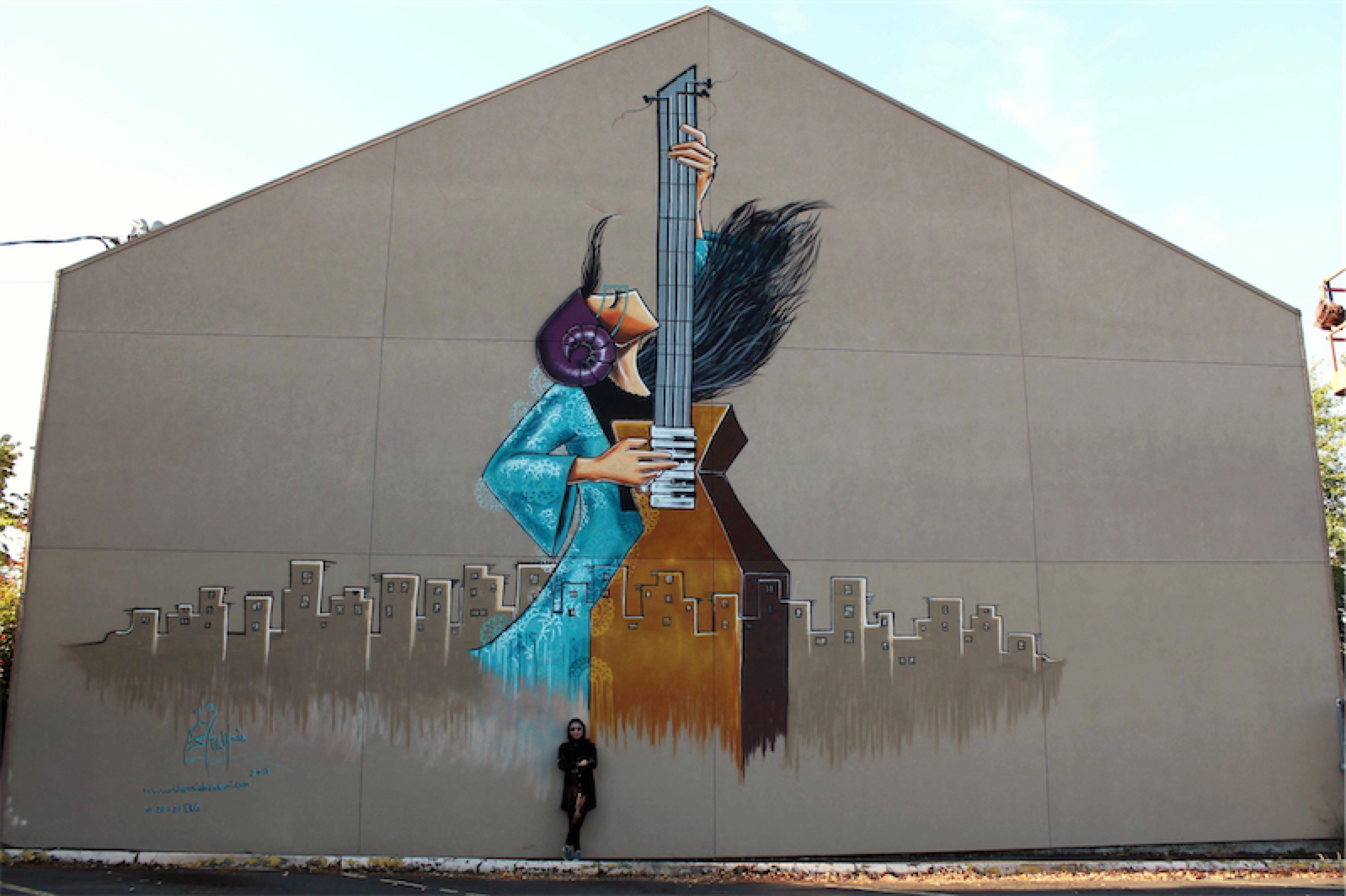
Across the fractured walls of Kabul, this unmistakable figure once appeared in vivid colour. With closed eyes, no mouth and often holding a musical instrument, she seemed suspended between silence and sound, hope and uncertainty. Through this recurring character, Shamsia Hassani’s graffiti reshaped the city’s visual landscape, turning buildings marked by conflict into poetic statements about dignity and perseverance.
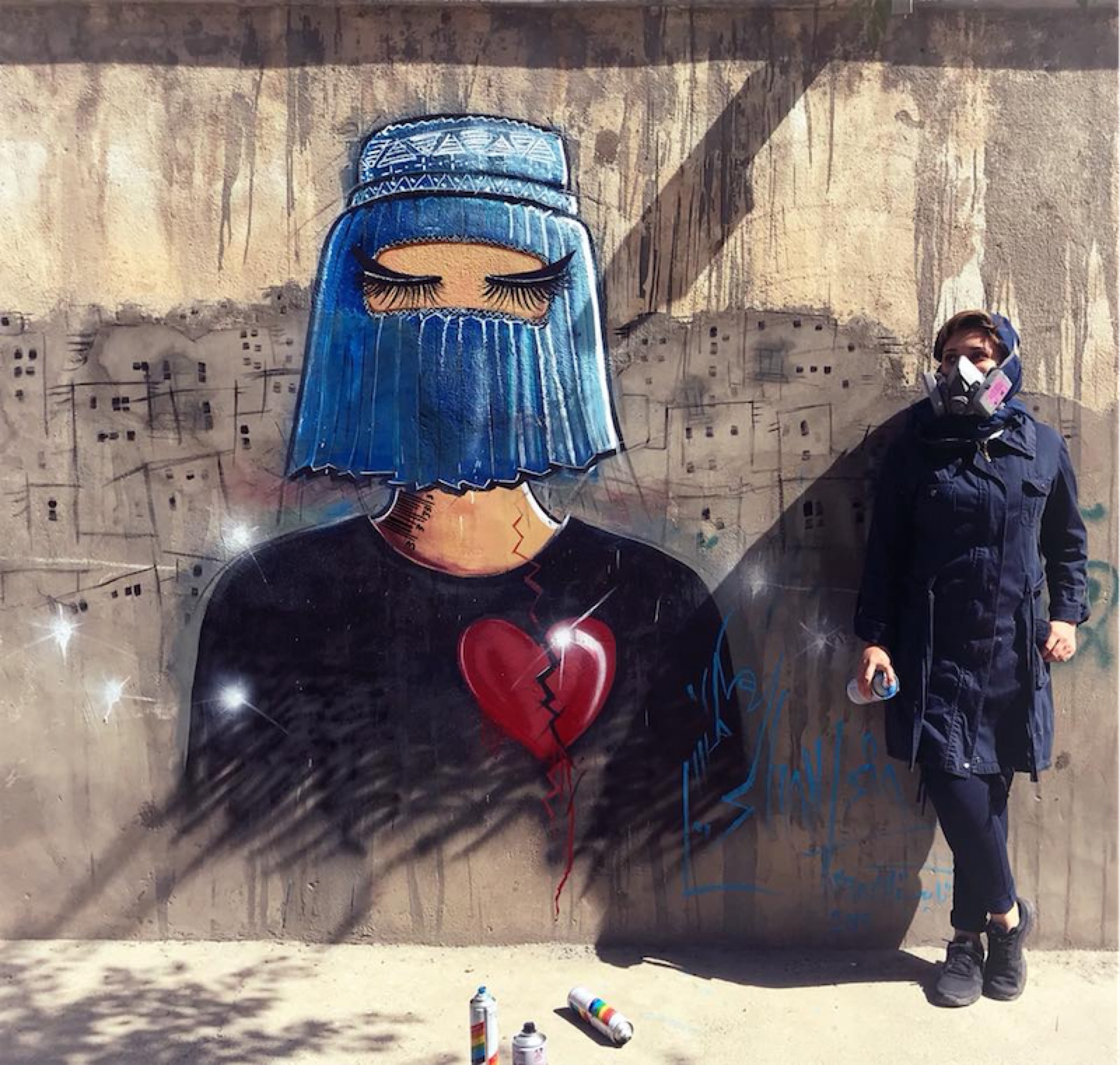
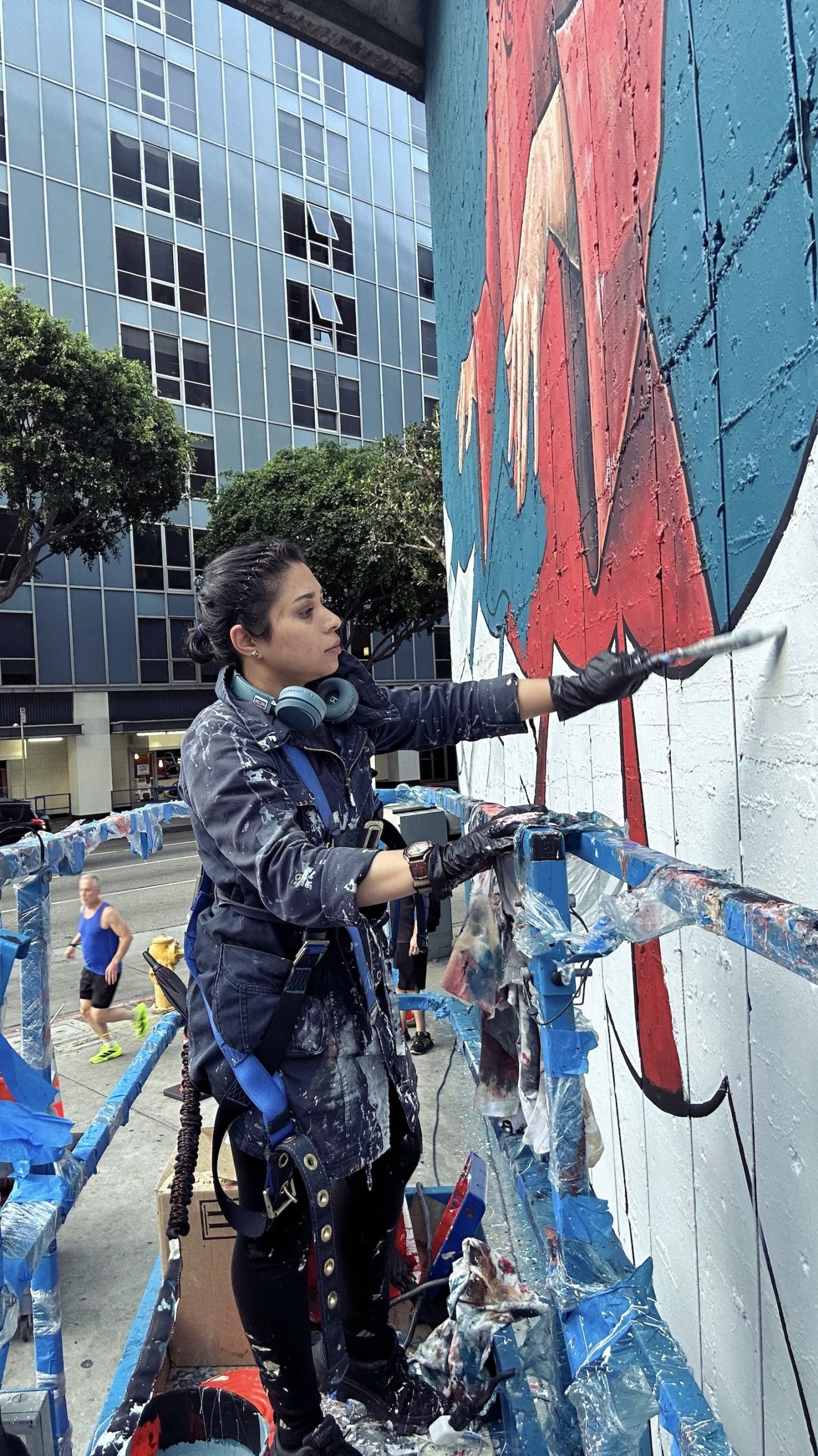
Following the return of the Taliban in 2021, painting openly in Kabul became increasingly dangerous. Hassani eventually left Afghanistan and is now based in Los Angeles, where her work continues to evolve through murals, paintings and digital projects. Despite the distance, her art remains deeply connected to Afghanistan and the stories of women and girls whose lives have been dramatically affected, including the more than two million girls currently denied access to secondary education.
Through symbolism, scale and a distinctive visual language, Shamsia Hassani’s graffiti art continues to resonate across borders. Her silent figures drift through dreamlike landscapes, carrying instruments, seeds and fragments of architecture while holding space for resilience and hope.
Who Is Shamsia Hassani, Afghanistan’s First Female Graffiti Artist?
Here are ten things to know about Shamsia Hassani, the artist whose murals and symbolic figures have brought global attention to Afghan street art and the experiences of women.
1. Afghanistan’s First Female Graffiti Artist
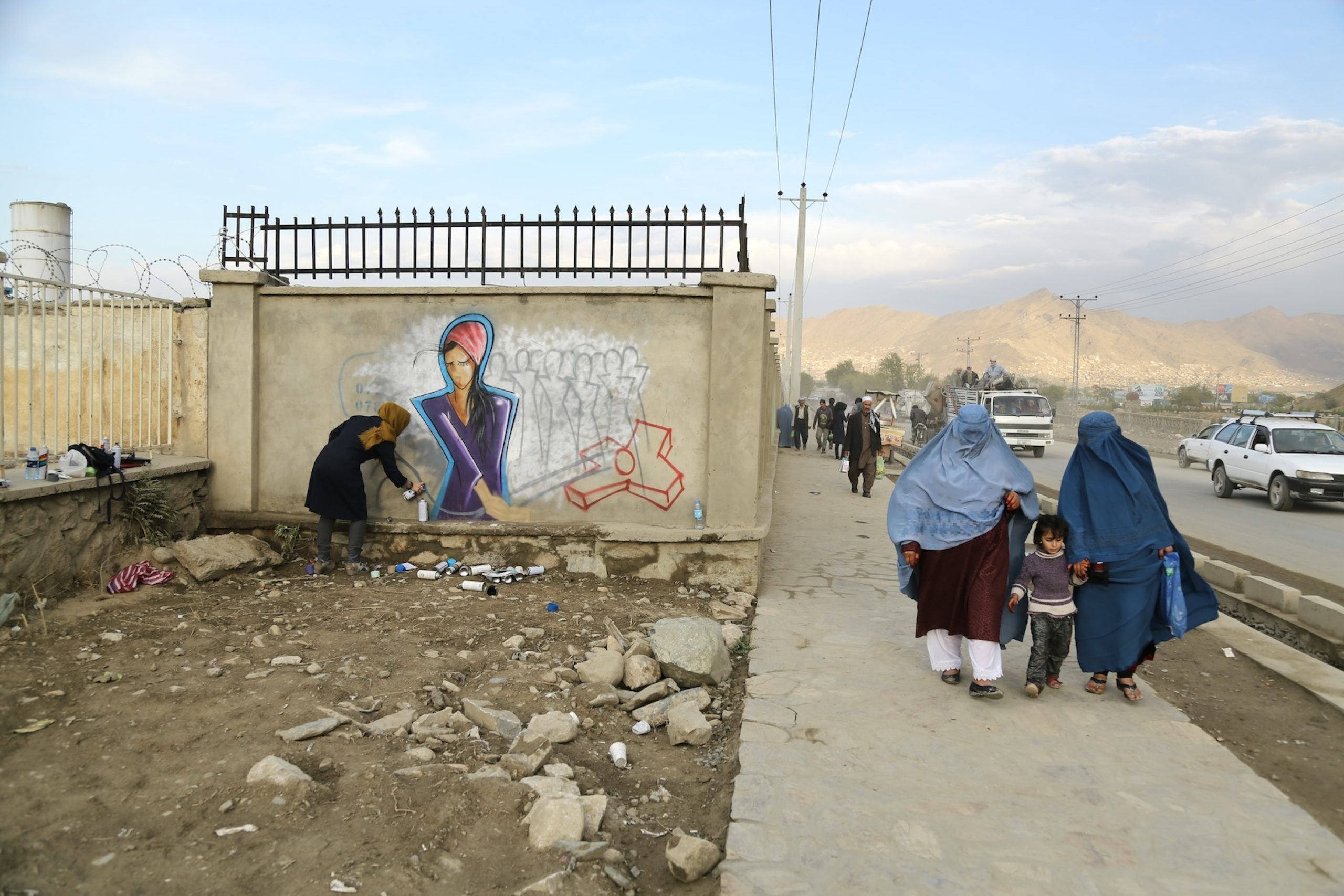
When Shamsia Hassani began painting in Kabul in 2010, the presence of a woman creating murals in public space was almost unheard of. Her work introduced graffiti into Afghanistan’s emerging contemporary art scene while also challenging perceptions of who has the right to occupy public space.
2. How Shamsia Hassani Discovered Graffiti
Shamsia Hassani discovered graffiti during a workshop in Kabul led by the British street artist CHU. While other participants explored the medium briefly, Hassani immediately recognised its potential. Graffiti offered something rare in Afghanistan at the time: a way to bring art directly to people outside the walls of galleries or institutions.
3. Painting Over the Scars of War
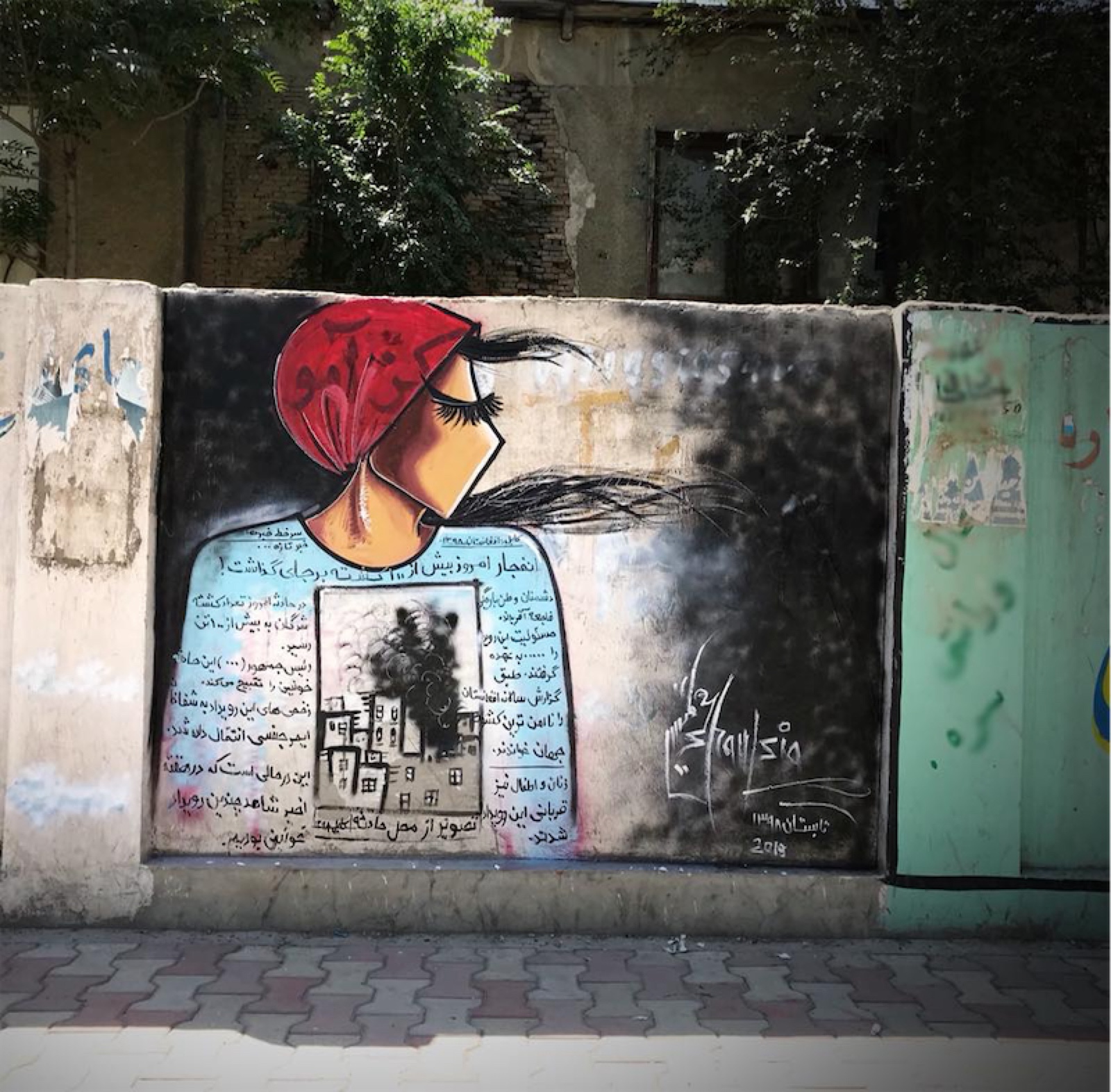
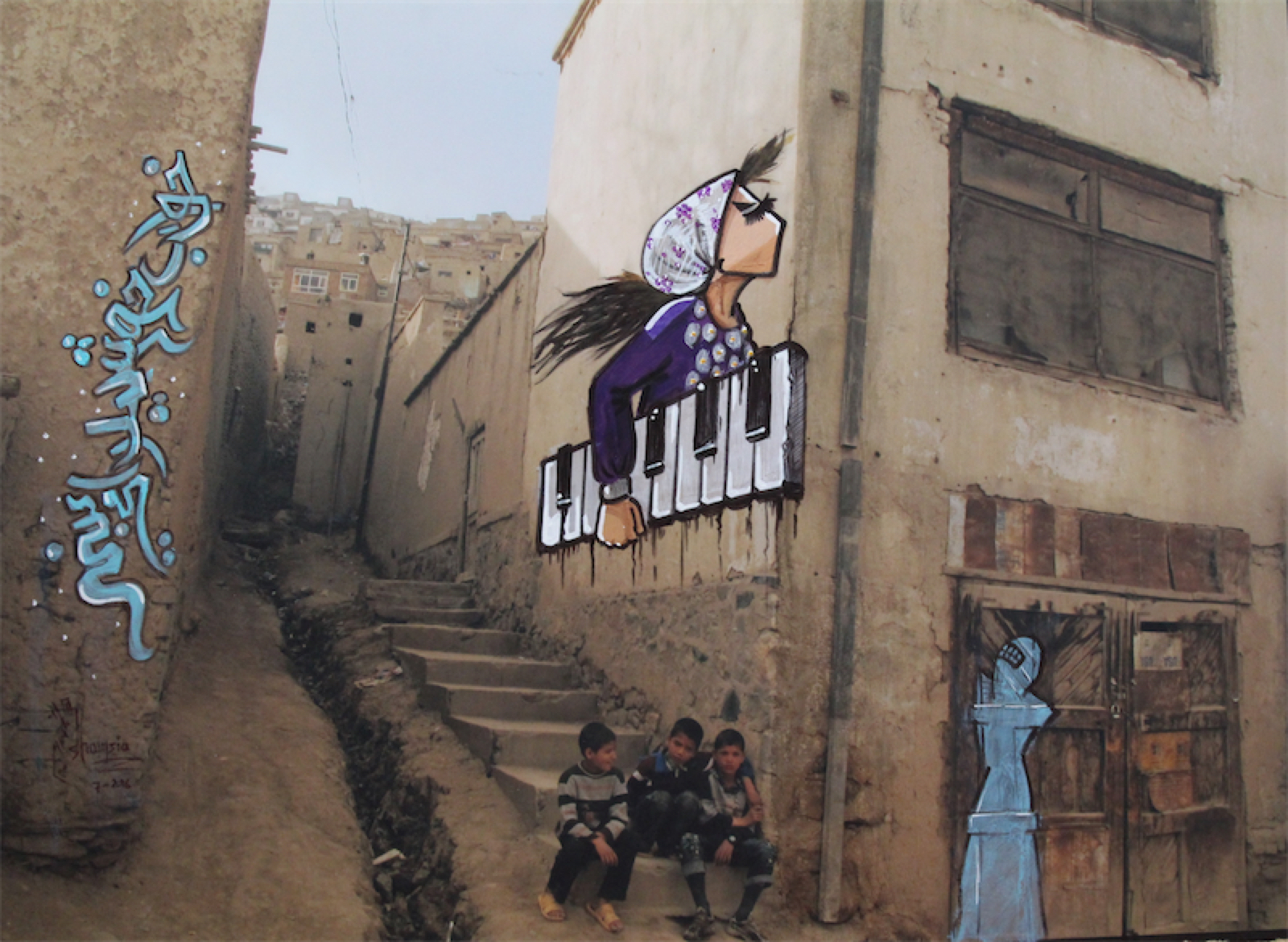
Many of Hassani’s murals appear on buildings damaged by conflict. Rather than ignoring these surfaces, she deliberately chooses them. Colour becomes a way of transforming memory, covering bullet marks and cracked walls with images that shift the narrative of the city from destruction to imagination.
4. The Female Figure at the Centre of Her Work
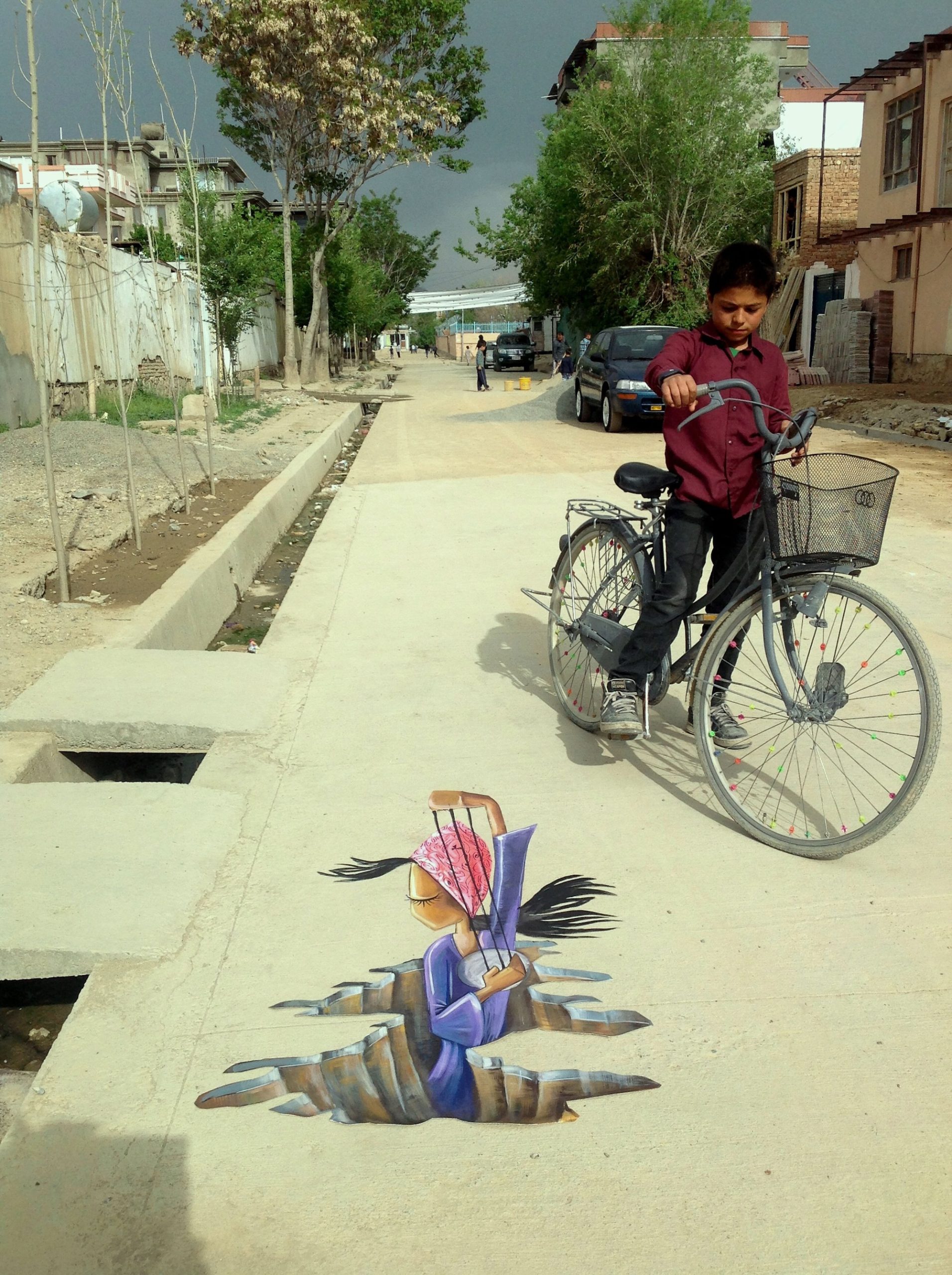
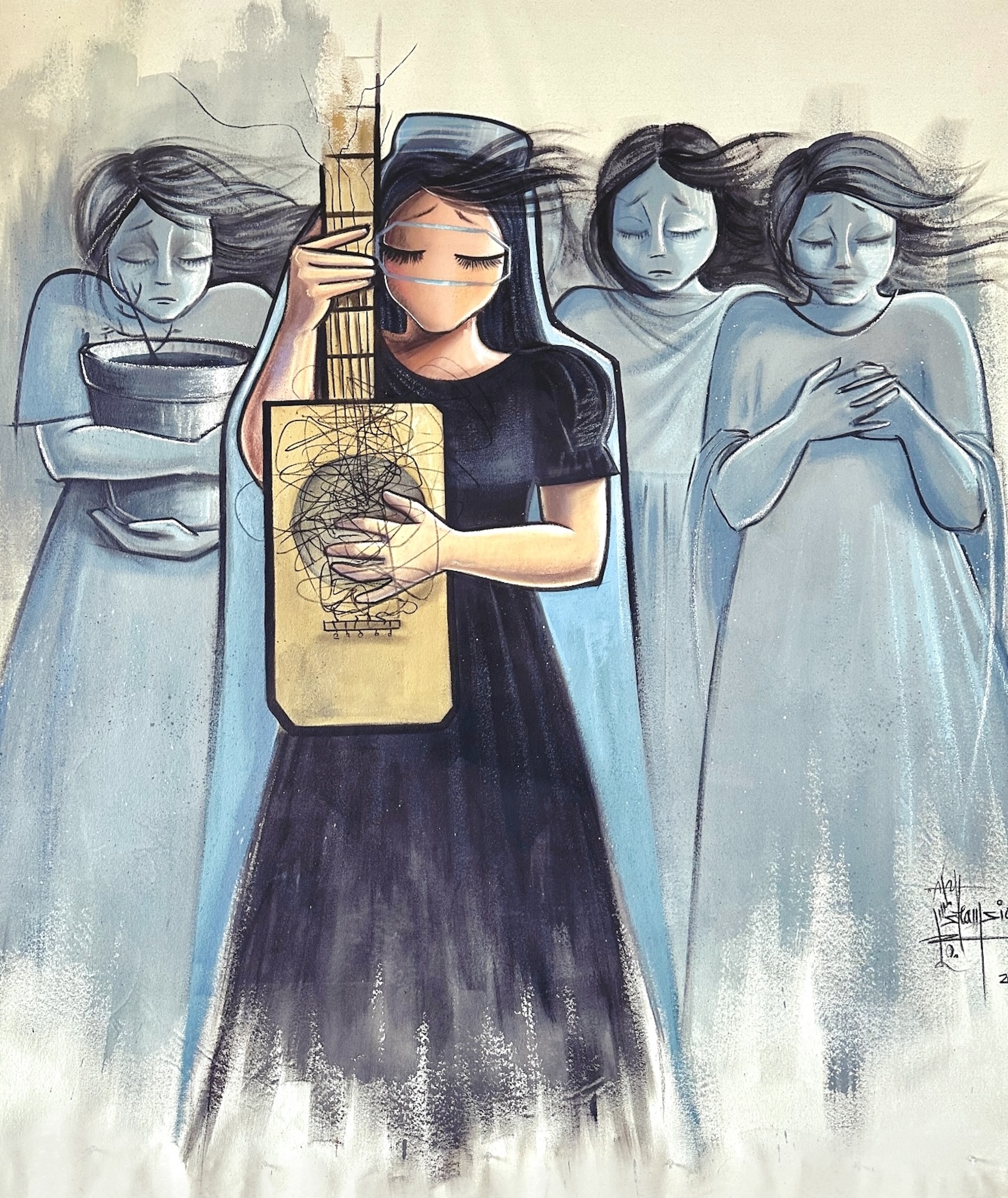
At the centre of Hassani’s visual language is a recurring female figure. The character changes colour, scale and setting from one work to another, sometimes floating above cityscapes and sometimes carrying fragments of architecture. Through these variations the figure embodies multiple roles including dreamer, refugee, survivor and symbol of hope.
5. Why Her Characters Have No Mouth
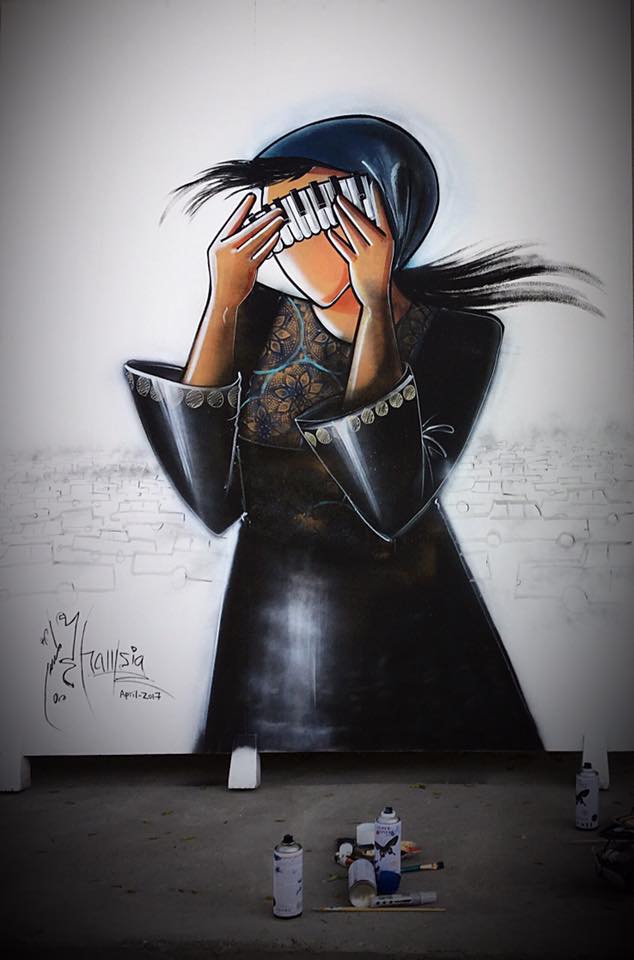
One of the most striking elements of Hassani’s work is the absence of a mouth. The detail reflects the ways women’s voices are often constrained within society. Rather than presenting silence as weakness, the artist transforms it into a powerful visual metaphor.
6. Musical Instruments as a Symbolic Voice
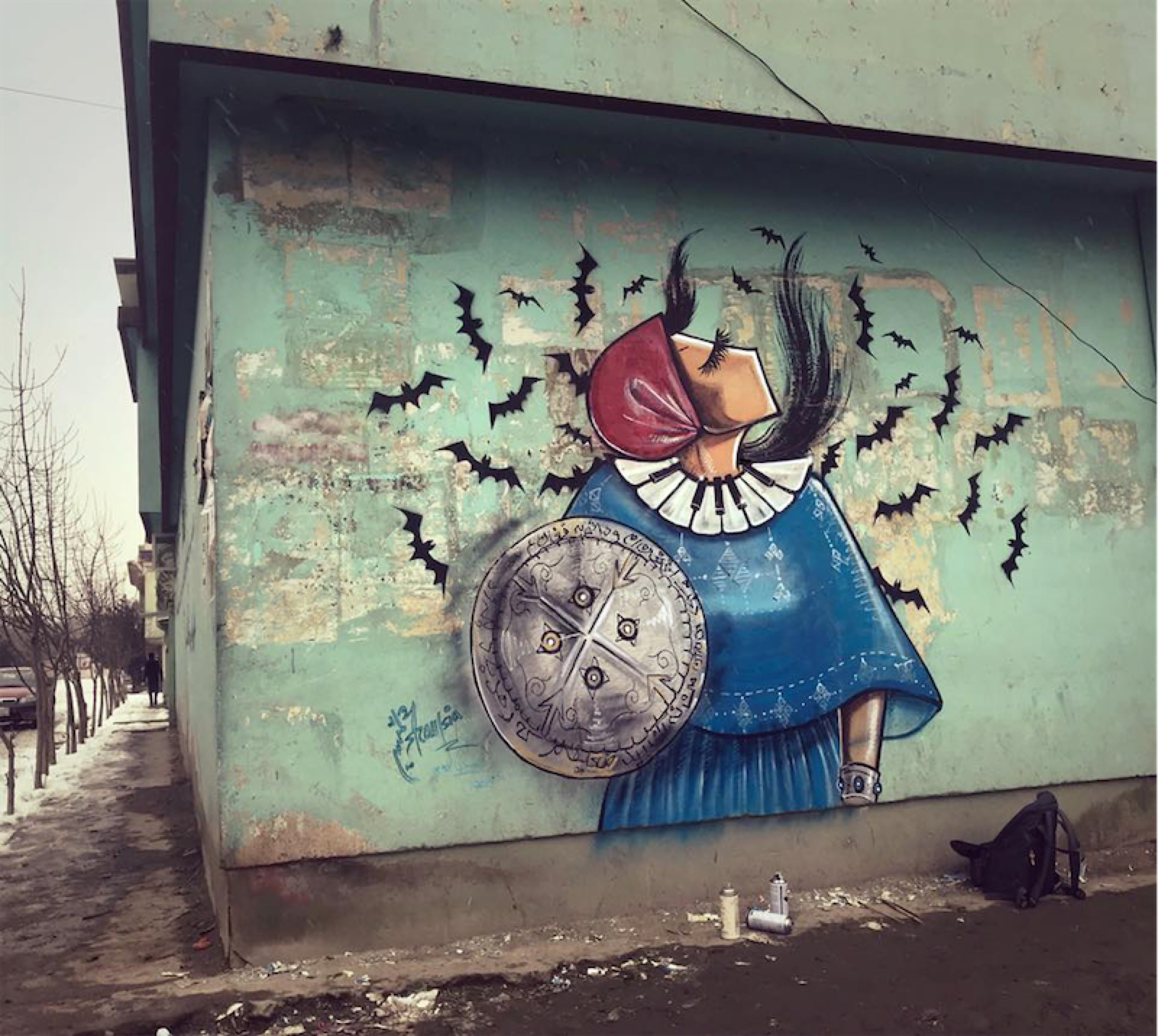
Because the character cannot speak, she frequently carries instruments such as pianos or trumpets. Hassani has described these instruments as an alternative language. Music becomes a way for the figure to communicate, suggesting that creativity itself can speak louder than words.
7. Why Her Characters Close Their Eyes
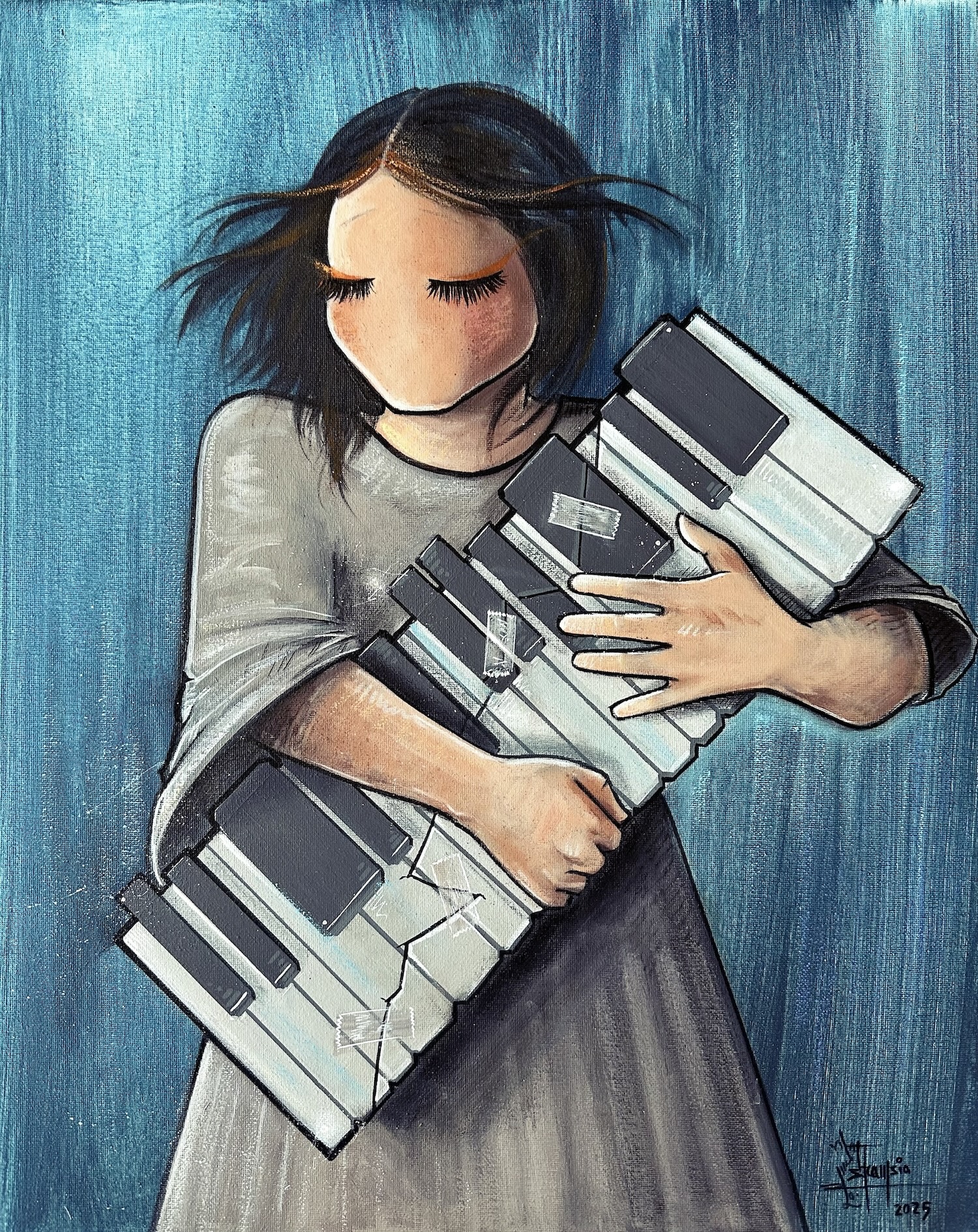
The closed eyes of Hassani’s figures reflect a complex emotional landscape. In the artist’s words, the character sometimes closes her eyes because there is little around her that offers hope. At the same time the gesture signals imagination and inner vision, a refusal to surrender to despair.
8. The Meaning Behind the Dandelion
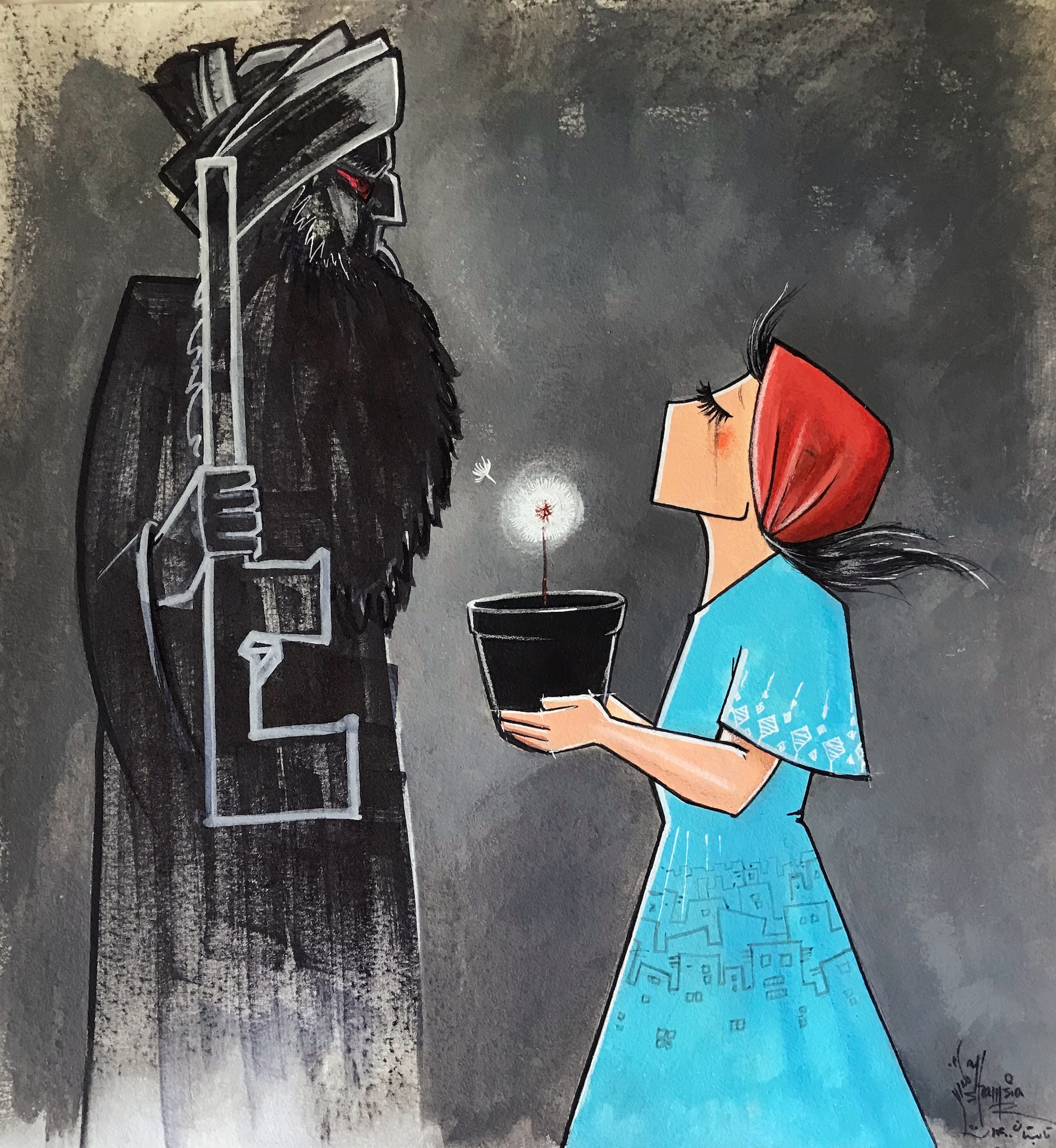
Another recurring motif in Hassani’s work is the drifting dandelion. The seeds travel freely through the air, carrying with them the possibility of new beginnings. Within her murals they become quiet symbols of hopes and dreams that continue to move even in uncertain circumstances.
9. The Dreaming Graffiti Project
As conditions in Afghanistan grew more unstable, Hassani created a series titled Dreaming Graffiti. In these works she painted digitally onto photographs of Kabul’s buildings, envisioning murals on walls she could no longer safely reach. The project reflects both the limitations imposed on artists and the determination to continue creating despite them.
10. A Global Artist Rooted in Afghanistan
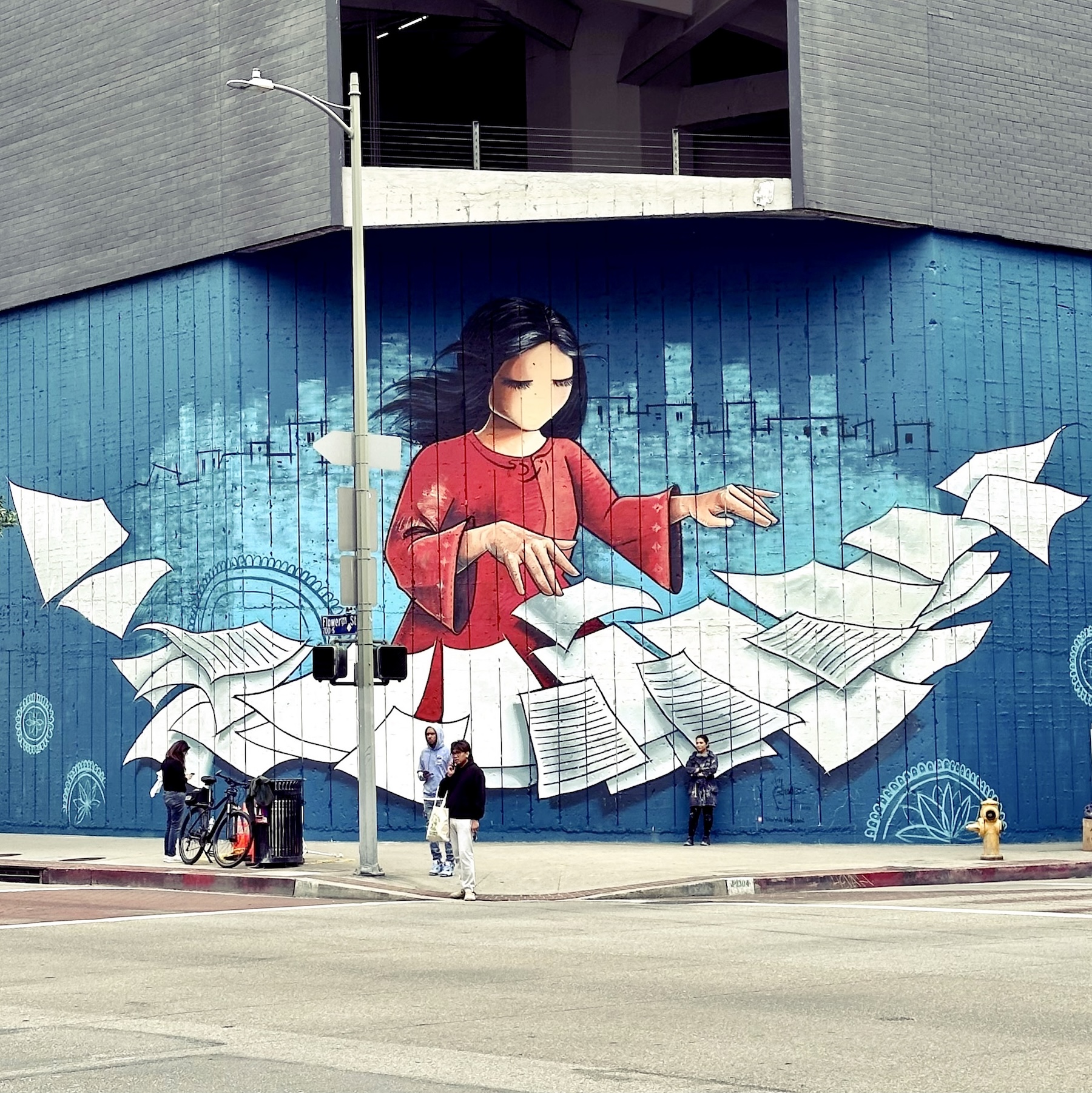
Following the Taliban’s return to power in 2021, Hassani left Afghanistan as it became increasingly unsafe to work publicly. Today her paintings and digital murals continue to circulate internationally, carrying with them the stories of Afghan women and girls, including the millions currently denied access to secondary education.
Why Shamsia Hassani’s Graffiti Matters Today
Today the work of Shamsia Hassani continues to resonate internationally. While she now lives and works in Los Angeles, her murals, paintings and digital projects remain deeply connected to Afghanistan and the experiences of Afghan women and girls. Through powerful symbolism and monumental female figures, Hassani’s work draws global attention to issues of resilience, identity and the ongoing struggle for education and opportunity.
Discover original works by Shamsia Hassani available through GraffitiStreet. A selection of her pieces can be viewed at our gallery in Chichester, England as part of the upcoming exhibition Urban Equinox, opening 20th march 2026.
You can also contact us directly to enquire about available artworks or private viewings.
Copyright © 2025 Shamsia Hassani. All Rights Reserved.