Street Art with More Impact, Recap of 2025
We’re proud to present our eleventh annual recap of 2025, highlighting the most impactful street art murals of the year. From January through December, we selected one standout work each month, murals that resonated far beyond their walls and sparked conversation, reflection, and action. Click on any month to explore the full story behind each piece and the context that shaped its impact.
Throughout the year, our news page has showcased a carefully curated selection of street art by some of the world’s most talented artists. Using powerful imagery and distinct visual languages, these murals confront injustice, amplify unheard voices, and offer moments of hope in public space. From environmental urgency to social and political struggle, each work demonstrates how street art continues to act as a vital, unfiltered form of communication.
We hope this annual recap inspires everyone who believes in the transformative power of art and its ability to challenge, connect, and drive positive change in the world.
January
Miami’s skyline gained a powerful new landmark with the unveiling of the city’s largest rooftop mural, stretching across 35,000 square feet atop the Southeast Financial Center. Created by internationally acclaimed artist Mantra and curated by Justkids, the monumental work draws urgent attention to biodiversity loss at a scale impossible to ignore.
Rendered in Mantra’s signature hyper-realistic trompe-l’œil style, the mural depicts fragile butterflies, including the endangered Miami Blue native to South Florida, painted in extraordinary detail. By elevating threatened species above the city itself, the work transforms Miami’s skyline into a call for ecological awareness, reminding viewers that what is disappearing quietly in nature must be seen loudly in public space.
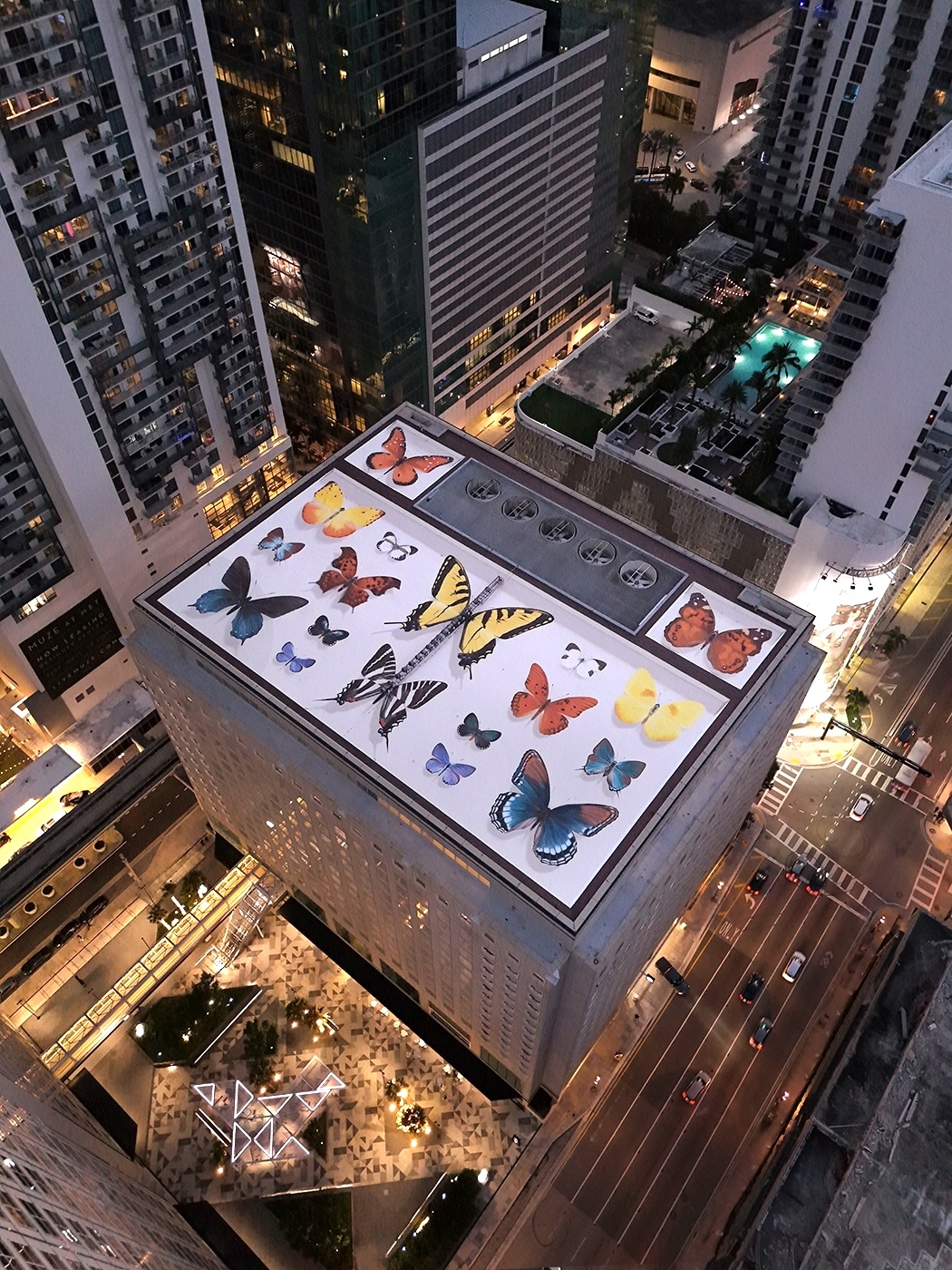
Image copyright JustKids
February
In February 2025, GraffitiStreet featured a standout mural by Greek artist Insane51 in Houston, Texas, titled Sthenos, Elévos / Strength, Bravery. The piece, curated and produced by Street Art for Mankind, celebrates resilience and the courage of a local hero named Michael, depicted doing a triumphant wheelie in his wheelchair with a cape raised skyward. The mural combines traditional painting with a 3D anaglyph experience (visible with red-blue glasses), adding a bird in flight that reinforces its theme of rising above adversity. Created over about ten days despite weather challenges, the work also aligns with Houston’s preparations for the 2026 FIFA World Cup, promoting inclusivity, empowerment, and community pride.
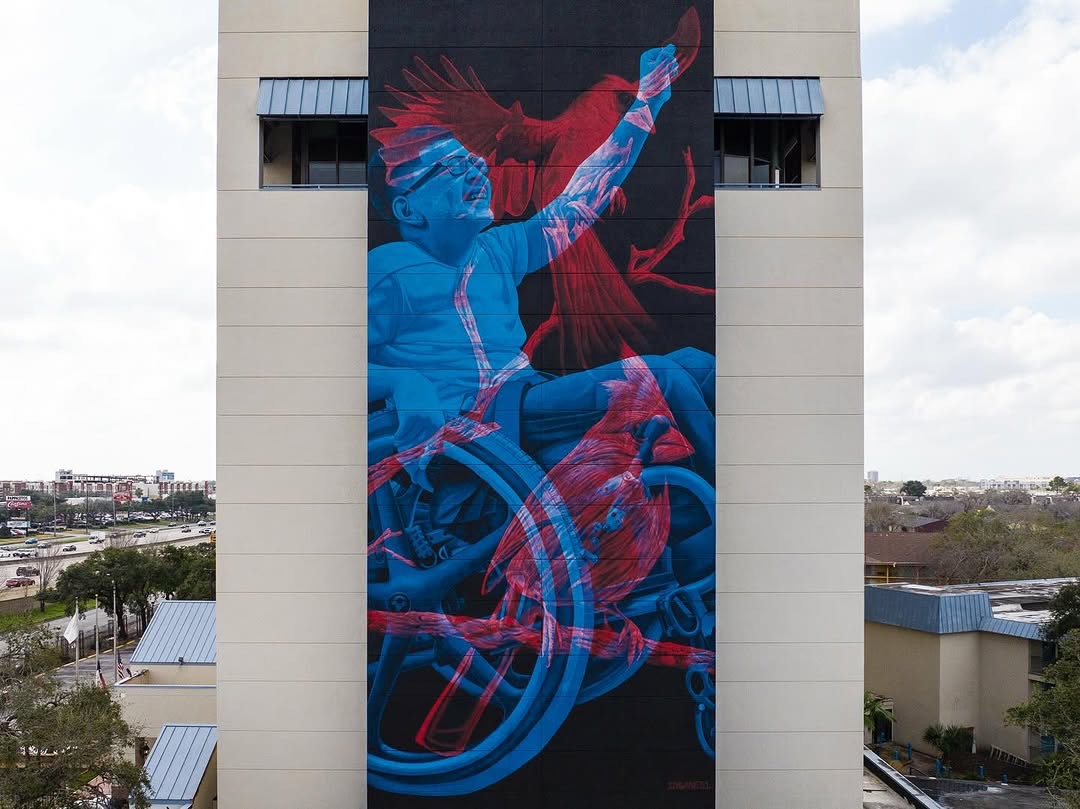
Image copyright Insane51
March
March 2025 saw GraffitiStreet spotlight a compelling new mural by British artist My Dog Sighs in Manchester’s Northern Quarter titled Fragile. The large-scale eye mural, part of Spray Days’ Walls of Manchester project, features a hidden tribute to Ian Curtis, the late lead singer of Joy Division, whose music and legacy deeply influenced the artist. By embedding Curtis’s image within the reflection of the eye and surrounding it with fragile tape, the piece evokes both Manchester’s rich musical heritage and the vulnerability tied to mental health struggles. The mural’s unveiling drew significant attention and served as a powerful visual prompt for conversations about emotional fragility, remembrance, and the urgency of mental health awareness in the UK.
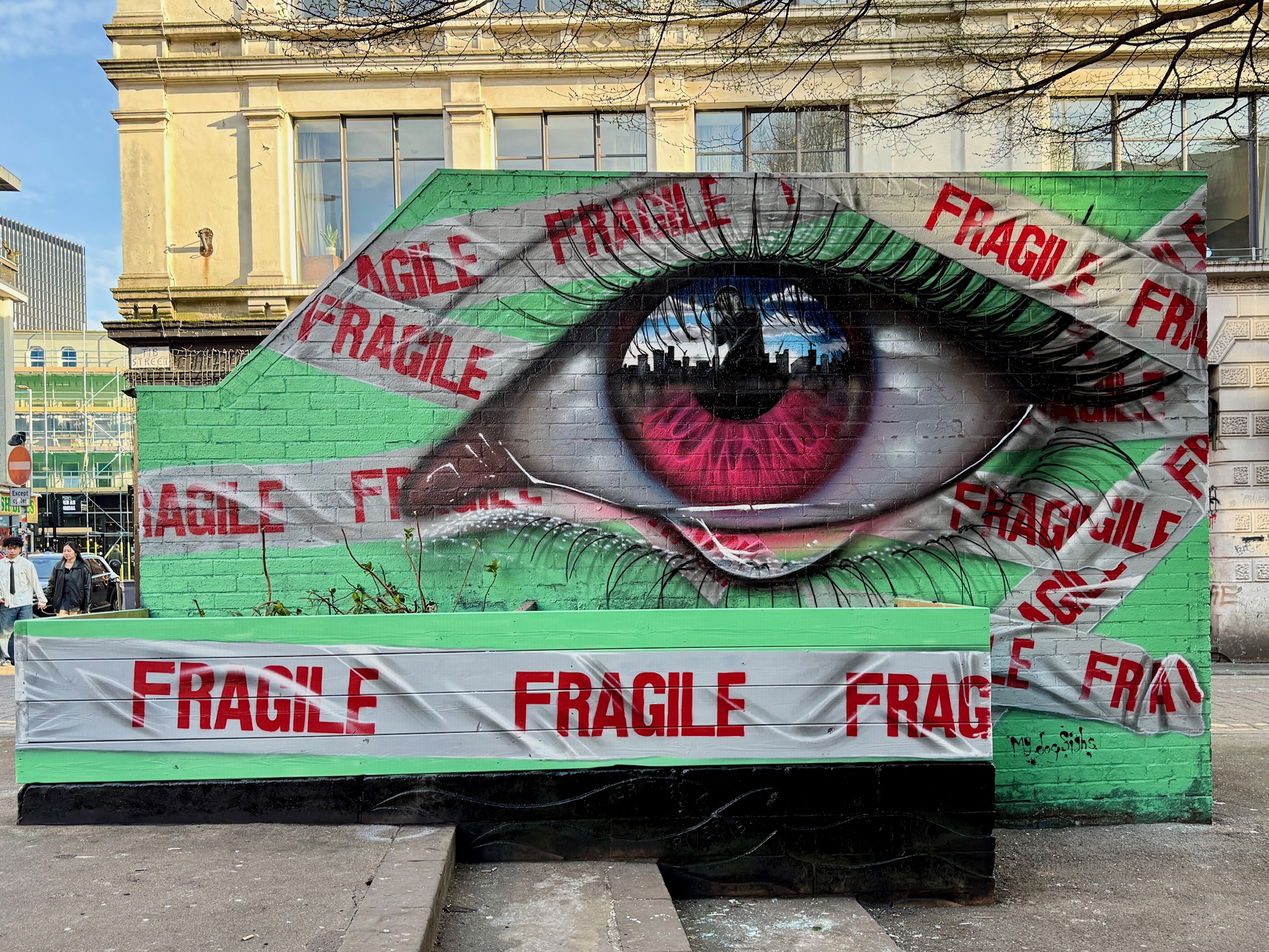
Image copyright My Dog Sighs
April
In April 2025, GraffitiStreet featured Demand Change, a deeply moving six-story mural by legendary street artist and activist Shepard Fairey in Washington, D.C.’s Chinatown district. The mural honours Joaquin “Guac” Oliver, one of the 17 students killed in the 2018 Parkland school shooting, and serves as an urgent, public call to end gun violence and pursue reform. Painted in collaboration with Joaquin’s father, Manny Oliver, and supported by Change the Ref and local partners, the work goes beyond tribute, it challenges viewers and lawmakers to confront the epidemic of gun violence and reassert the value of safety, life, and community in public life.
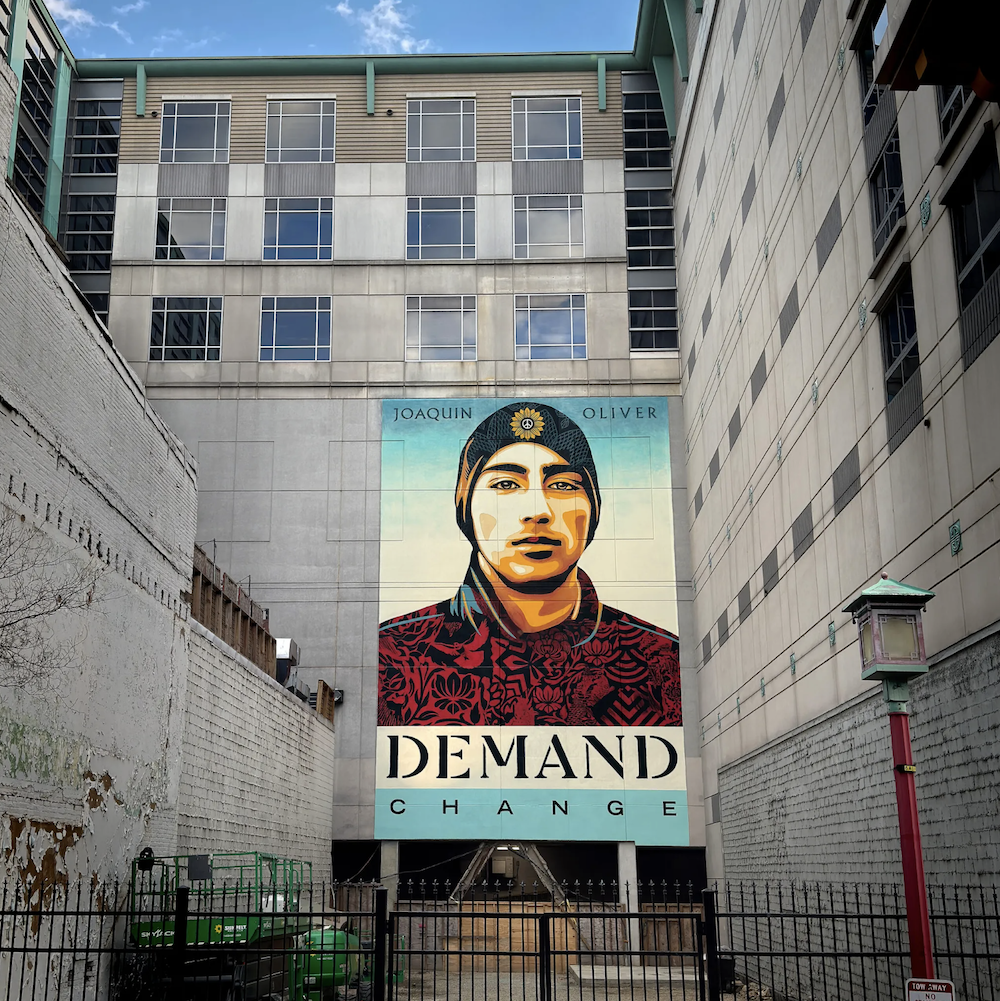
Image copyright Shepard Fairey
May
In May 2025, GraffitiStreet featured Bordalo II’s provocative installation Monoplizada / Monopolised in Praça do Duque da Terceira in Lisbon’s Cais do Sodré. The Portuguese artist transformed the historic square into a giant Monopoly-style board game as a public protest against the country’s worsening housing crisis. By wrapping the statue and paving the plaza with oversized Monopoly squares, hotel icons, and satirical game imagery, Bordalo II turned a familiar playground metaphor into a searing critique of economic inequality and speculative real-estate dynamics, where, in his view, the “right to housing” has become a matter of luck rather than a constitutional guarantee. The intervention invited passers-by to physically step into the work, blurring lines between spectator and participant and making the critique impossible to ignore.
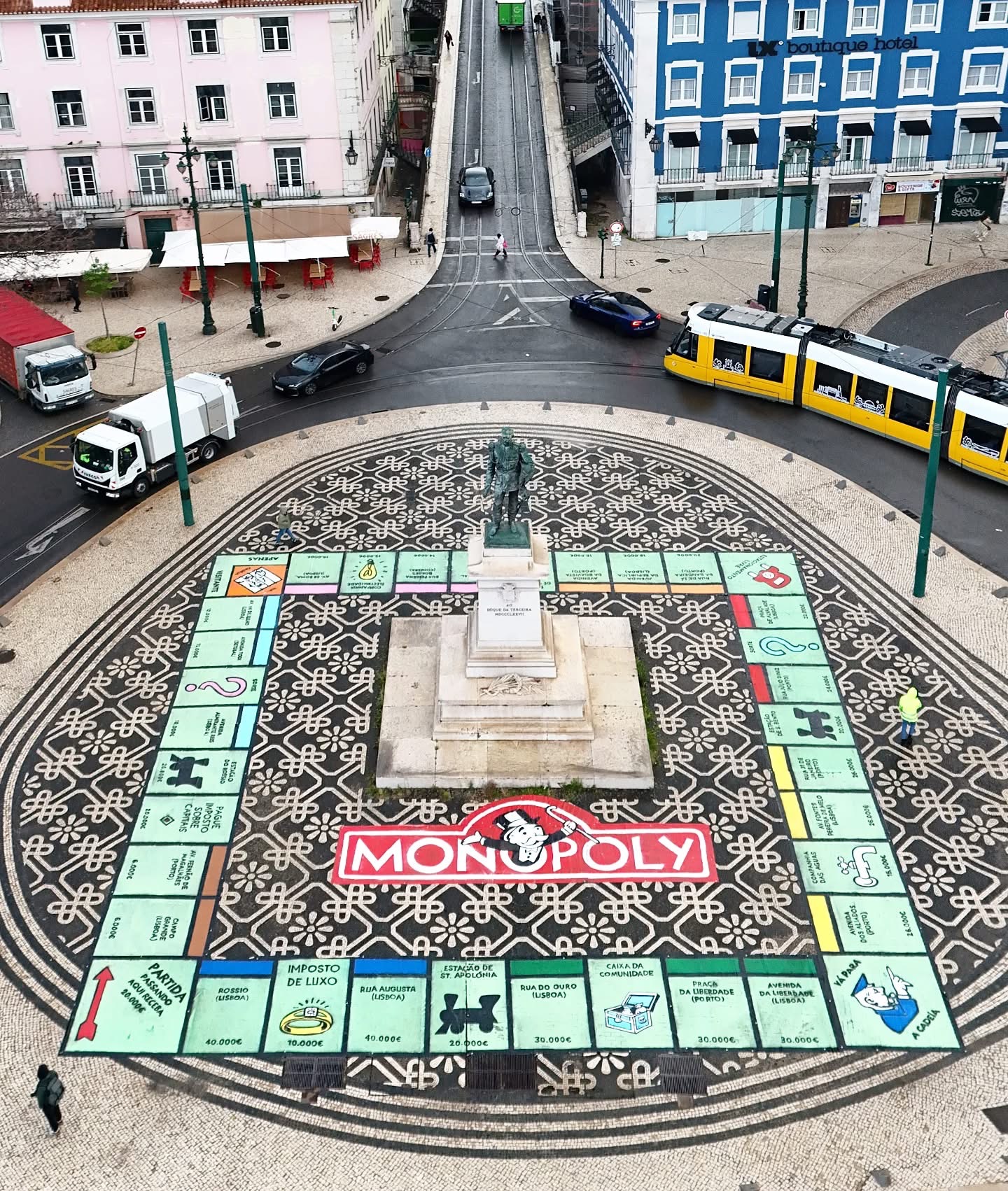
Image copyright Bordalo II
June
In June, GraffitiStreet showcased Helen Bur’s emotionally rich mural Windows // Women at Hoepfner Castle in Karlsruhe, Germany — a work that reimagines a 19th-century Romantic painting through a contemporary lens. Bur drew inspiration from Georg Friedrich Kersting’s Embroidery Woman and expanded the concept into a series of seven life-sized painted “windows,” each depicting a local woman in her own environment. Painted in seven intense days as part of the Walls of Vision public art initiative, the mural invites reflection on modern womanhood, individuality, and shared human experience while bridging art history with lived narratives. The work turns the castle facade into a collective tableau of presence, identity, and connection, extending the quiet dignity of the original into a vivid public dialogue.
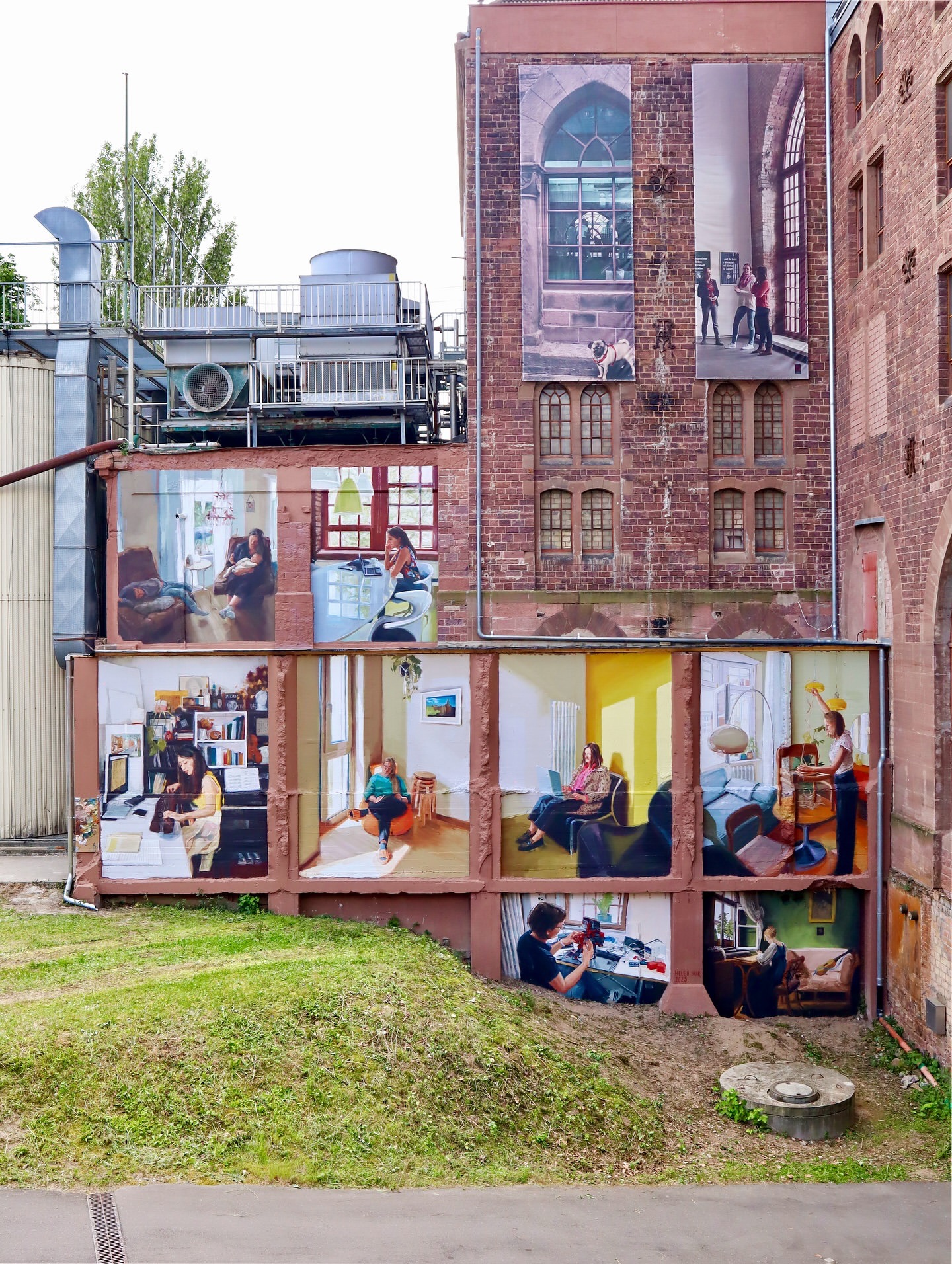
Image copyright Helen Bur
July
July 2025 saw Bordalo II’s Sensitive Content appear high above the streets of Paris, delivering one of the year’s most powerful statements through deliberate restraint. Composed of only three elements — a blurred Palestinian flag, the words “Sensitive Content”, and a mute icon — the mural confronts the mechanisms of censorship, asking who decides what suffering is too uncomfortable to witness.
Bordalo II exposes the systemic silencing of human suffering, particularly in relation to Palestine, where images are increasingly flagged, muted, or erased. In a moment when foreign media access to Gaza is severely restricted, the work resonates far beyond the wall, echoing the politics of visibility and control that shape modern conflict.
Amplifying its impact, the mural was released as a limited print edition, with 100% of proceeds supporting humanitarian aid through SafeBow. In doing so, Sensitive Content transformed quiet resistance into direct action — a reminder that when images are suppressed, art can still insist on the right to see, to bear witness, and to respond.
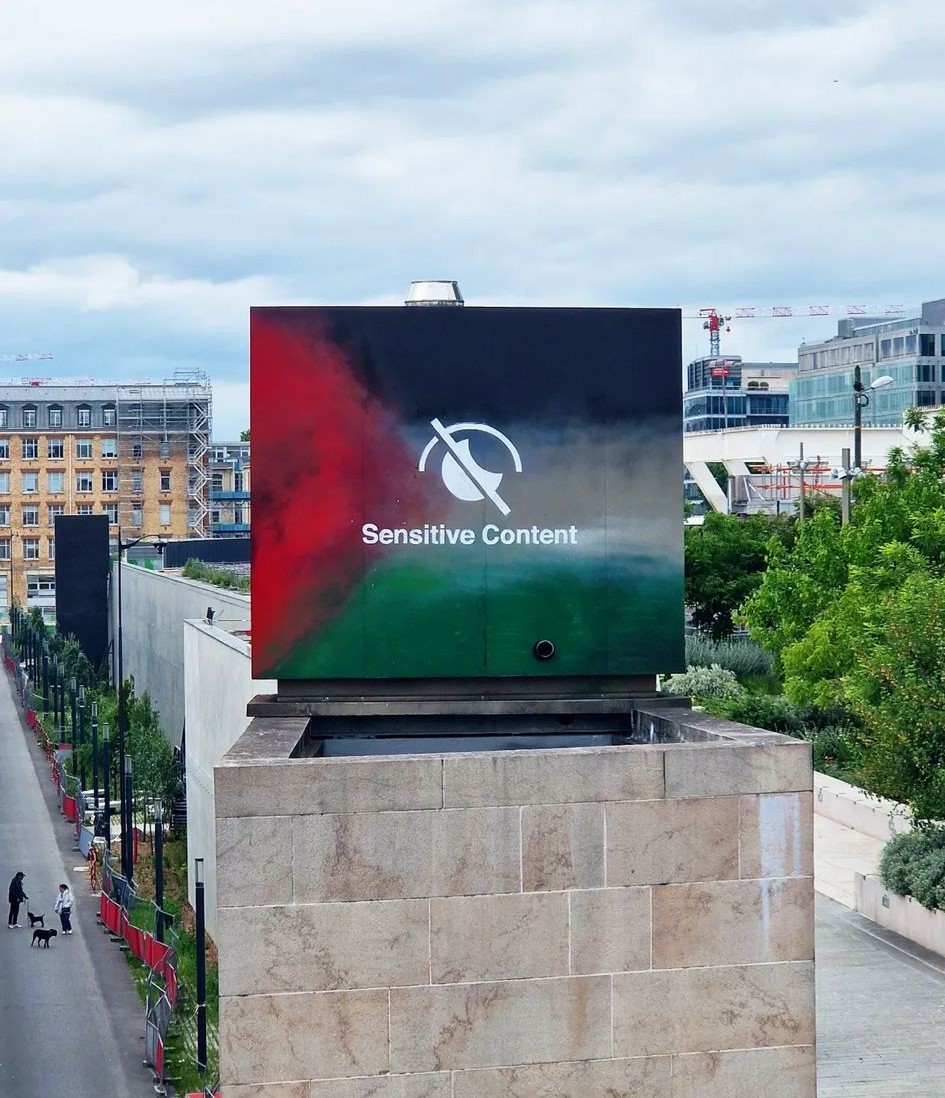
Image copyright Bordalo II
August
August 2025 saw Case Maclaim’s Funny Heartache take centre stage in Boulogne-sur-Mer, painted to mark the 10th anniversary of the Street Art Boulogne-sur-Mer festival. Filling a tall façade in the city’s historic centre, the hyperrealist portrait depicts a young woman whose expression sits between amusement and introspection.
More than a striking image, the mural confronts female visibility in public space, challenging familiar expectations to smile, soften, and perform. By meeting the viewer’s gaze with quiet confidence, the figure reclaims agency, turning being looked at into an act of looking back. Funny Heartache reminds us that visibility itself can be a form of resistance, and that emotional nuance has a powerful place on the public wall.

Image copyright Case Maclaim
September
September 2025 saw a provocative Banksy mural appear on the walls of London’s Royal Courts of Justice, depicting a judge wielding a gavel against a fallen protester, a stark visual metaphor for the tension between state power and civil dissent. The piece was widely interpreted in the context of recent protests and hundreds of arrests linked to the UK government’s ban on Palestine Action, making the imagery feel especially urgent and timely.
Despite its visibility on Carey Street and the intense reaction it sparked online and in activist communities, authorities swiftly covered and then removed the mural due to the listed status of the building. The act of erasure only amplified its impact, turning the controversy into part of the artwork’s message about censorship, protest, and the price of speaking truth to power.
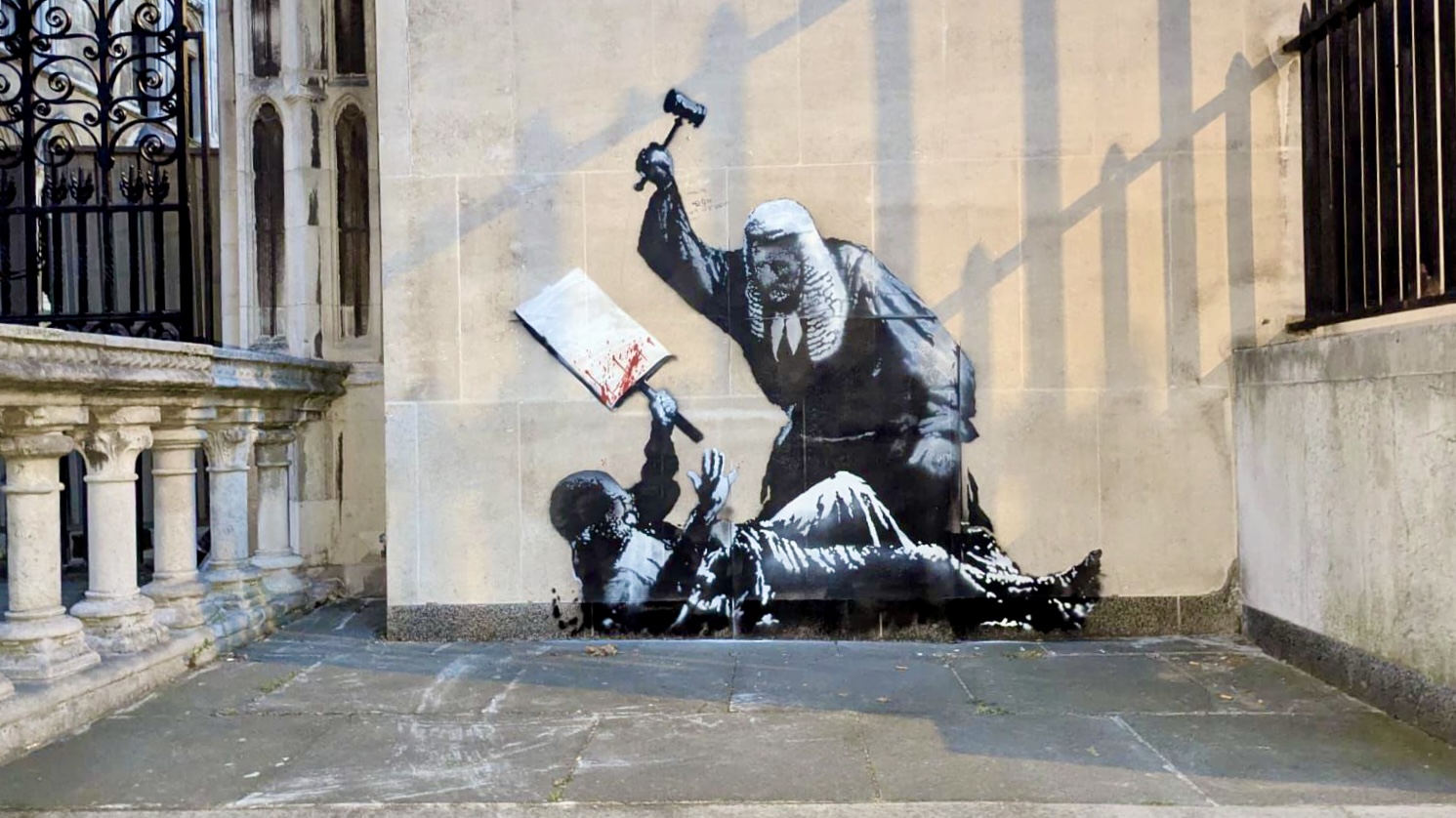
Image copyright Banksy
October
October 2025 featured Ricardo Romero’s Fading, a striking riverside installation that cast a ghostly polar bear sculpture beneath a railway bridge, where it seemed to drift on the water like a spectre of loss and transition. The work used the haunting image of a fading Arctic icon to reflect on the urgent reality of climate change and environmental fragility — a moment when ecosystems slip from certainty into uncertainty. GraffitiStreet
Rather than a static public artwork, Fading acted as a poetic environmental mirror, inviting passers-by to witness the symbolism of melting ice and fading memory in real time. Its ephemeral presence underscored not only nature’s vulnerability but our shared responsibility to confront ecological change before what is familiar becomes irretrievable.
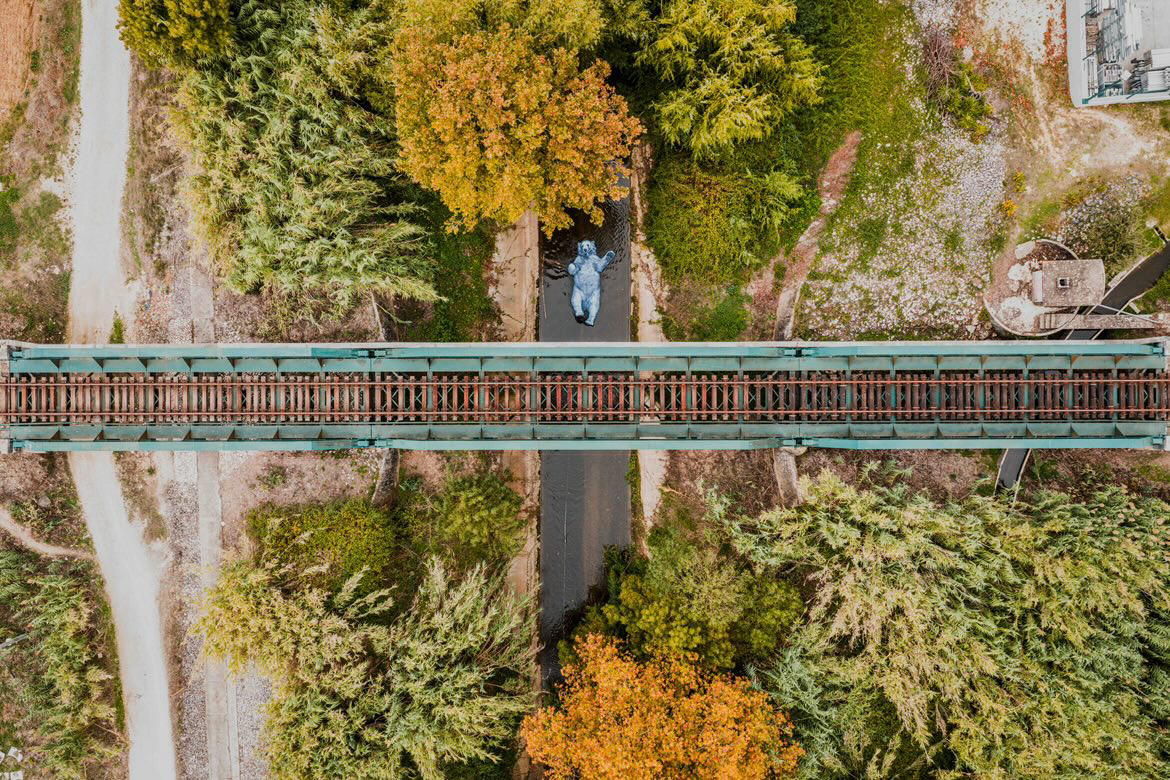
Image copyright Ricardo Romero
November
November 2025 saw Leon Keer’s Nature’s Algorithm transform a downtown Des Moines parking structure into a monument to attention in an age of distraction. Spanning 8,600 sq ft, the anamorphic mural uses stacked retro televisions glowing with wildlife imagery to question what we choose to watch, and what shapes our inner lives.
Rather than opposing technology, the work reframes it. By positioning nature as a counter-algorithm — older, steadier, and more intelligent than any digital feed, Keer invites viewers to slow down, look closely, and recalibrate their relationship with attention itself. Enhanced with augmented reality, the mural extends beyond the wall, becoming an immersive call to replace constant scrolling with stillness, awe, and conscious presence.
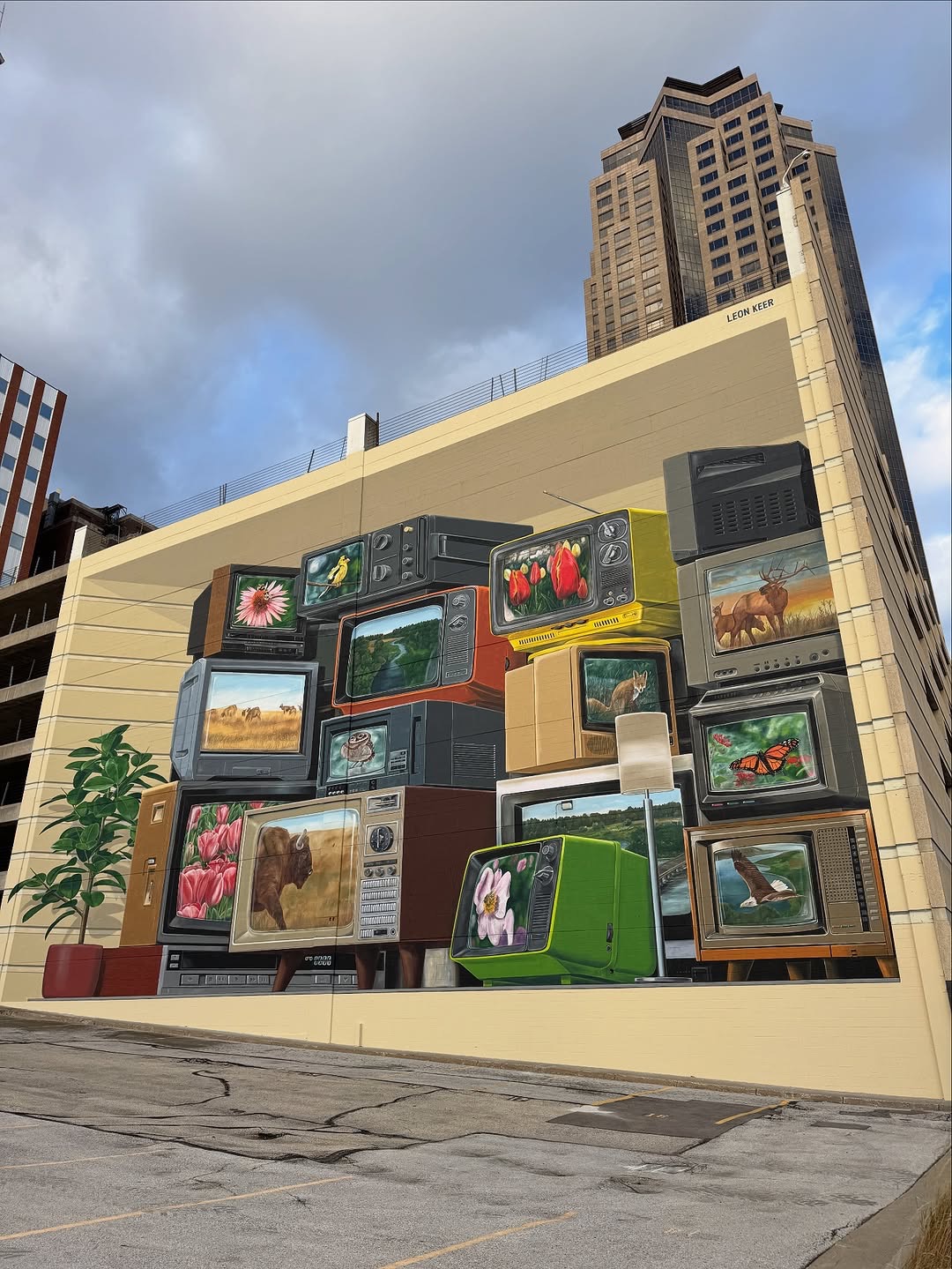
Image copyright león Keer
December
December 2025 closed the year with Seth Globepainter’s The Tree of Books at the Ma Led Phan Library in Nong Khiaw, Laos, a mural rooted in education, imagination, and community care. Painted within an elementary school supported by the non-profit NK Seeds, the work depicts a child immersed in reading, surrounded by branching books that grow like a living tree of knowledge.
More than an image, the mural became an active extension of the library’s mission, blurring art and everyday life as local children read, draw, and participate directly in its creation. Through collaboration and presence, The Tree of Bookstransformed the wall into a shared space of learning and possibility, affirming that access to stories, education, and creativity can quietly shape futures. Its impact lies not in spectacle, but in its lasting role as a symbol of growth, care, and the transformative power of reading.
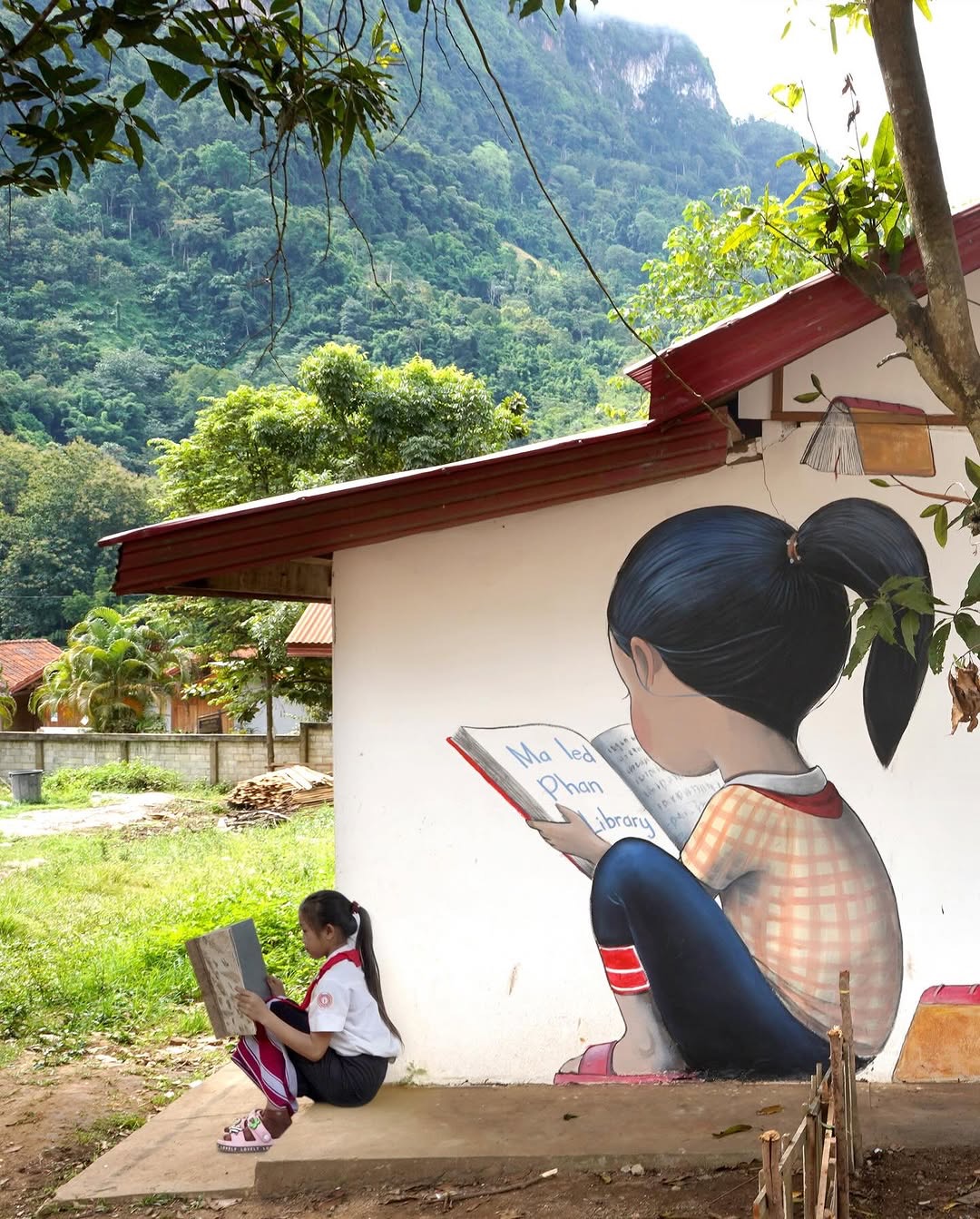
Image copyright Seth Globepainter
Christmas Bonus!
Closing the year with quiet force, Banksy’s Christmas intervention unfolded across two London locations, using repetition, placement, and timing to spotlight youth homelessness. The mural confirmed via the artist’s official channels, delivered its message without spectacle, and all the more powerfully for it.
The first mural appeared beside Centre Point, the so-called “North Star” of London, where two children lie on the pavement, pointing skyward. Against a backdrop synonymous with both luxury living and the origins of the youth homelessness charity Centrepoint, the image reframed the city’s skyline through the lens of inequality. In a country where millions of children live in poverty, the simple act of looking up became a quiet political gesture.
The second, identical mural surfaced days later on an abandoned building in Queens Mews, Bayswater. Here, the children’s outstretched arms align perfectly with a single red scaffolding light, transforming it, after dark, into a star. Crucially, the star is not painted. It exists only through context, perception, and attention.
Through minimal means, Banksy turned the city itself into part of the artwork. His mural asked viewers to slow down, look closer, and confront the uncomfortable reality that for many young people, Christmas is not a season of abundance, but of absence. In doing so, the murals transformed festive symbolism into a sober call for visibility, empathy, and responsibility. Read more here.

Image copyright Banksy
As we step into a new year, we’re excited to continue sharing street art projects, insightful artist interviews, and murals that shape the cities around us on our News page. After more than a decade immersed in urban art, we remain endlessly inspired by the power of walls to tell stories, challenge perspectives, and spark change.
To keep up with the latest from GraffitiStreet, follow us on Facebook and Instagram, and visit our news page regularly for updates from the global street art scene.
We wish you a happy and healthy New Year, and we can’t wait to welcome you in 2026 as we continue this journey together, both online and at our gallery space on West Street, Chichester, where the conversation between street and studio continues to evolve.
Team GS