Marilyn Monroe in Art: How Contemporary Artists Continue to Reimagine an Icon
As the world celebrates the 100th anniversary of Marilyn Monroe’s birth, her influence continues to resonate across contemporary art. More than six decades after her death, Monroe remains one of the most reinterpreted cultural figures in modern history, inspiring artists from Andy Warhol and Invader to Sandra Chevrier and Pure Evil. Through Pop Art, Rubikcubism, street art, and contemporary portraiture, artists continue to explore her image as a symbol of fame, identity, vulnerability, resilience, and cultural transformation.
Published June 2026 | Updated June 2026
Why Does Marilyn Monroe Continue to Inspire Artists?
As the world marks what would have been Marilyn Monroe’s 100th birthday, her influence extends far beyond Hollywood. Monroe remains one of the most recognisable faces in modern history, inspiring generations of artists across Pop Art, street art, contemporary portraiture, photography, and printmaking.
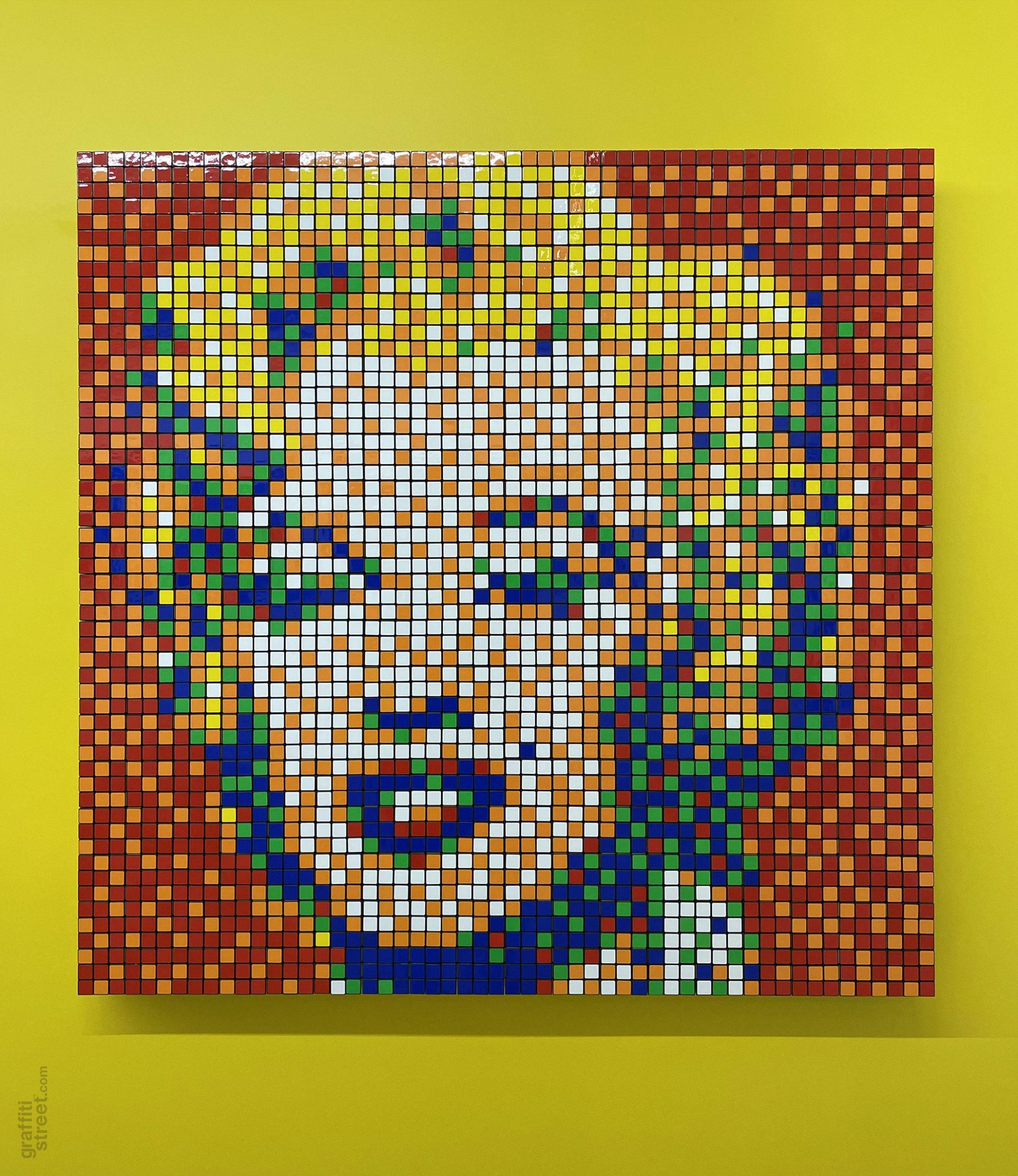
Rubikcubisim Rubik Shot Red Marilyn displayed at Invader Space Station. Paris. Image copyright GraffitiStreet
Often reduced to an image of glamour and celebrity, Monroe was also a pioneering businesswoman, advocate for creative independence, and supporter of racial equality during a period of deep social division in America. She challenged expectations placed upon women in the entertainment industry, founded her own production company, and used her platform to support artists including Ella Fitzgerald, helping to break racial barriers within the cultural landscape of the 1950s.
Marilyn Monroe was also a passionate advocate for mental health awareness and used her own struggles with depression and anxiety to raise awareness and promote a greater understanding of these issues. Her famous quote about being “selfish, impatient, and a little insecure” has become an iconic symbol of female empowerment and resilience.
“I’m selfish, impatient, and a little insecure. I make mistakes, I am out of control and at times hard to handle. But if you can’t handle me at my worst, then you sure as hell don’t deserve me at my best.” — Marilyn Monroe
Perhaps this is why artists continue to return to Monroe. Behind the iconic photographs was a woman navigating fame, identity, vulnerability, ambition, and public scrutiny. Her story remains as relevant today as it was during her lifetime, offering endless opportunities for artistic reinterpretation.
“I want to grow old without facelifts. I want to have the courage to be loyal to the face I have made.” — Marilyn Monroe
As contemporary artists revisit Monroe through their own visual language, they reveal not simply a Hollywood icon, but a cultural figure whose influence continues to shape conversations around celebrity, gender, power, and representation.
How Did Andy Warhol Transform Marilyn Monroe Into a Pop Art Icon?
No artist is more closely associated with Marilyn Monroe than Andy Warhol.
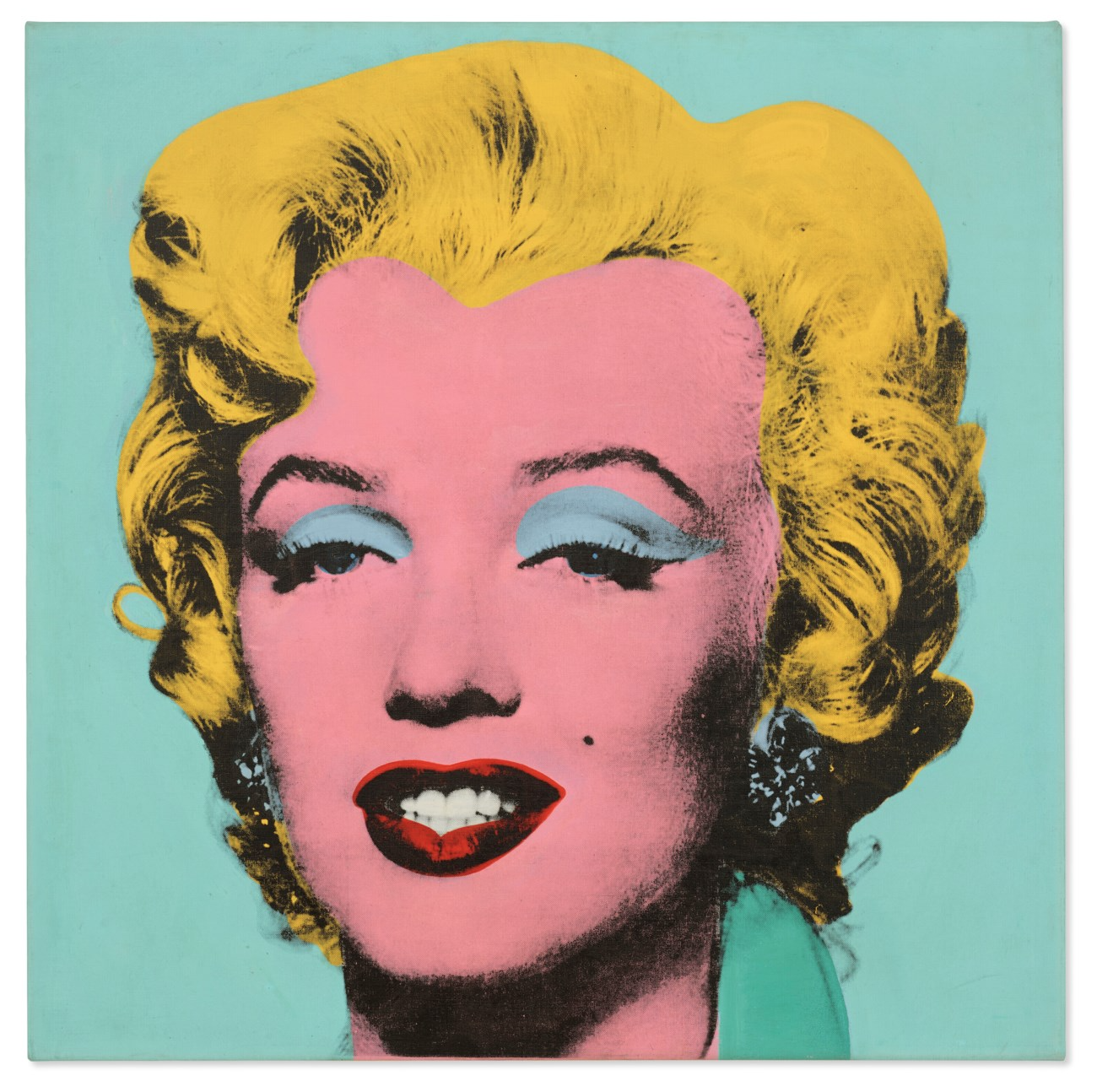
Following Monroe’s death in 1962, Warhol began producing a series of silkscreen portraits based on a publicity photograph from the film Niagara. These works would become some of the defining images of Pop Art and help establish Warhol as one of the most influential artists of the twentieth century.
Through repetition, vibrant colour, and subtle variations, Warhol transformed Monroe from a Hollywood star into a universal cultural symbol. His portraits explored the relationship between celebrity, mass media, consumer culture, and mortality, revealing how fame can elevate an individual while simultaneously reducing them to an image.
One of the most celebrated examples, Shot Sage Blue Marilyn, achieved US$195 million at Christie’s New York in 2022, setting a record as the most expensive twentieth-century artwork ever sold at auction.
The title itself carries a remarkable story. In 1964, performance artist Dorothy Podber visited Warhol’s Factory and asked whether she could “shoot” the Marilyn paintings. Interpreting the request literally, she produced a revolver and fired a bullet through a stack of five Monroe canvases, piercing each one through the forehead. Warhol later restored the damaged works, which became known collectively as the Shot Marilyns. Today, the incident forms part of the mythology surrounding the series, adding another layer to artworks already concerned with fame, image, and mortality.
More than sixty years after Monroe’s death, Warhol’s portraits remain among the most recognisable works in contemporary art, demonstrating the enduring power of both artist and subject.
How Did Invader Reimagine Marilyn Monroe Through Rubikcubism?
French artist Invader approached Marilyn Monroe from an entirely different perspective.
Best known for his mosaic street interventions inspired by early video games, Invader developed a technique known as Rubikcubism, using Rubik’s Cubes as artistic building blocks to reconstruct some of the most recognisable images in art history and popular culture.
His work Rubik Shot Red Marilyn reinterprets Andy Warhol’s famous portrait through pixelation, geometry, and colour reduction. Viewed up close, the image dissolves into individual cubes and abstract blocks of colour. From a distance, Monroe’s face re-emerges with remarkable clarity, demonstrating how deeply embedded her image remains within our collective visual memory.
Part of Invader’s celebrated Rubik Master Pieces series, the work pays homage not only to Monroe but also to Warhol’s Pop Art legacy. By translating one iconic artwork into another visual language, Invader explores how cultural images evolve, circulate, and remain relevant across generations.
The artwork demonstrates that Marilyn Monroe’s image transcends medium, technology, and time. Even when radically transformed into a mosaic of coloured cubes, she remains instantly recognisable, reinforcing her status as one of the most enduring icons in both art and popular culture.
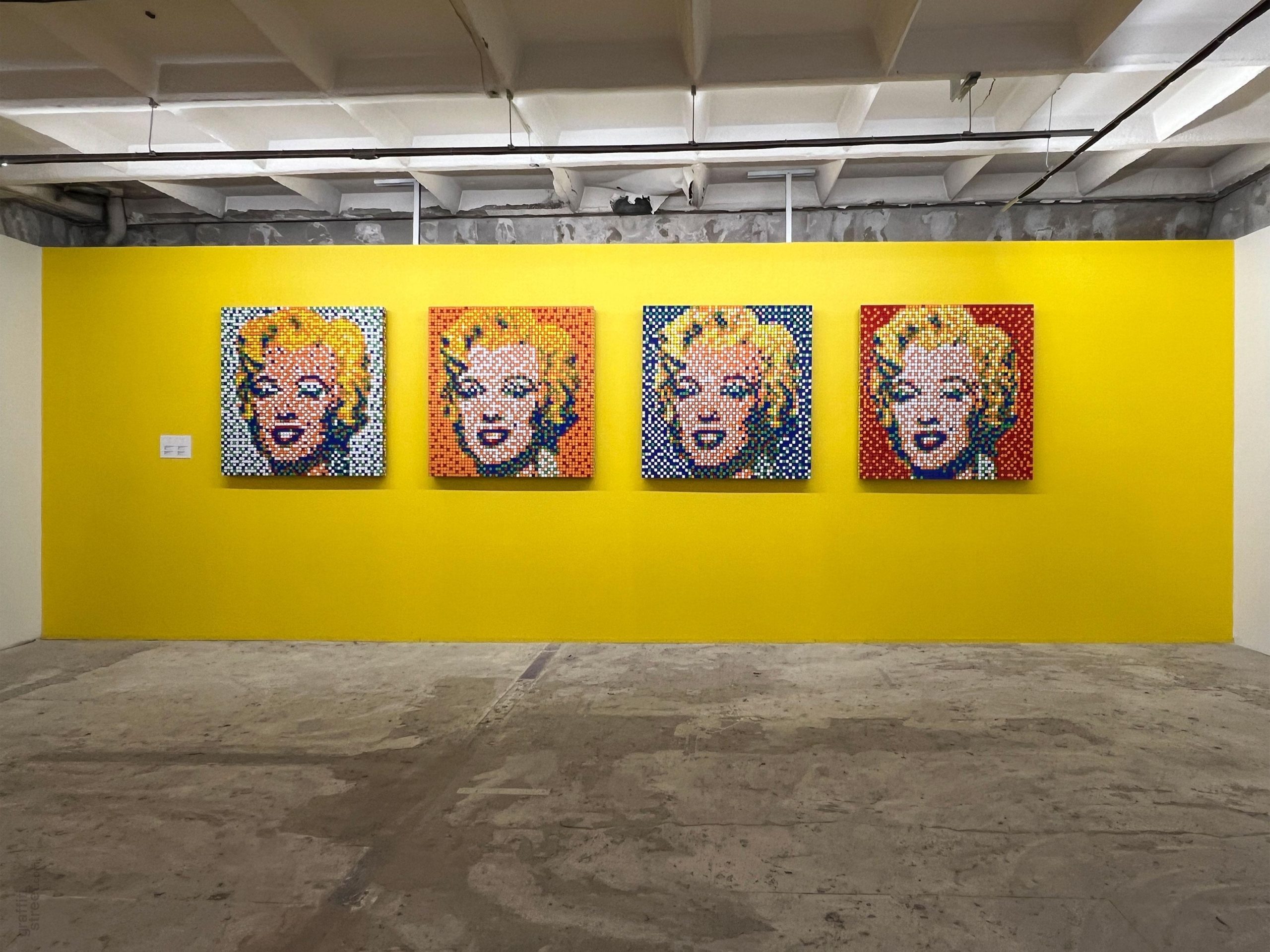
Rubikcubisim Rubik Shot Red Marilyn displayed at Invader Space Station. Paris. Image copyright GraffitiStreet
Rubik Shot Red Marilyn deconstructs the glamorous world of celebrity and fame. The Diasec-mounted Giclée on the aluminium composite panel produced by HENI uses glossy finishes and vibrant, luminous colours. This was a new experimental medium for Invader, and he produced four different images for this edition.
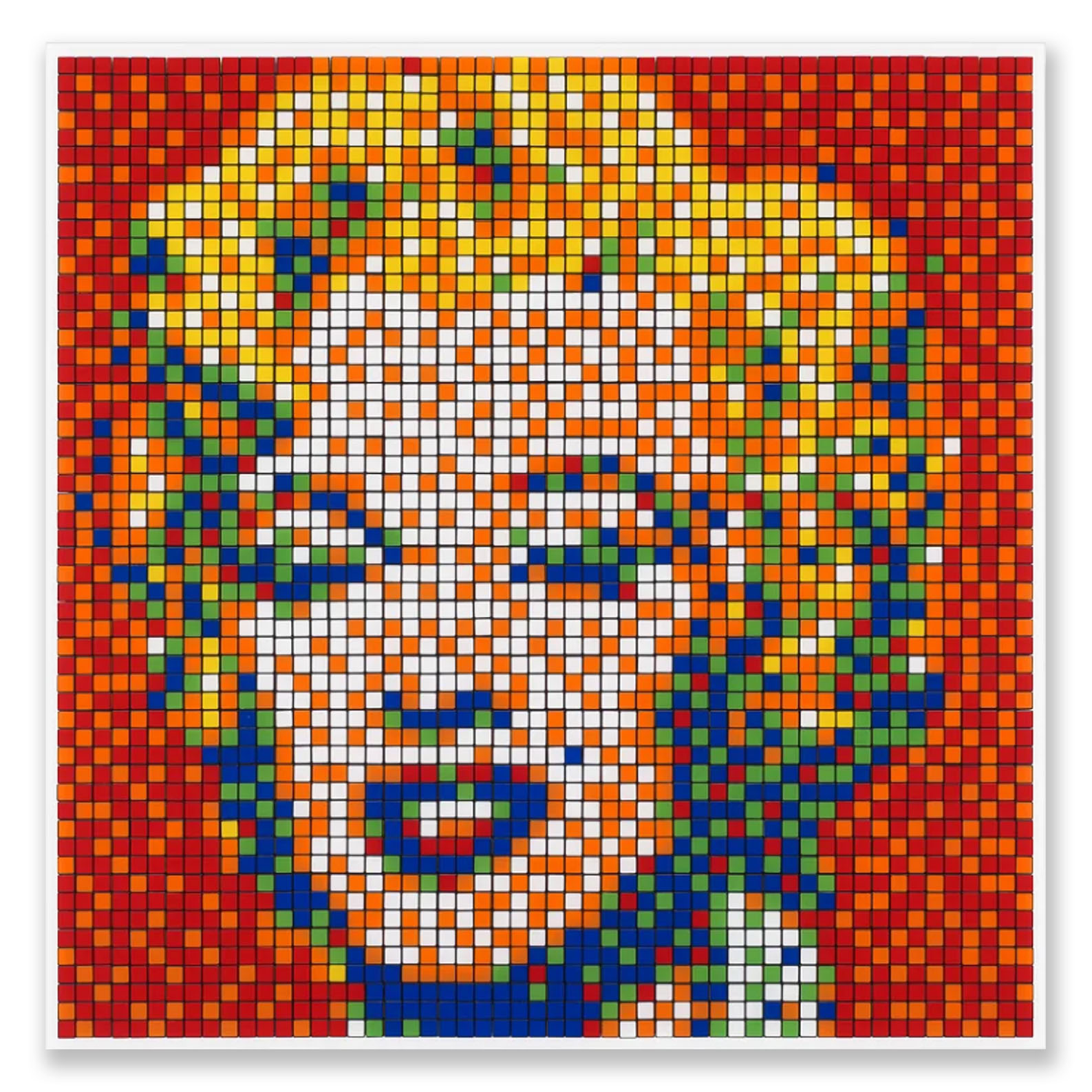
Invader – Rubik Shot Red Marilyn
Why Does Sandra Chevrier Use Marilyn Monroe in Her Portraits?
Canadian artist Sandra Chevrier approaches Marilyn Monroe through the lens of identity, expectation, and female empowerment.
Her celebrated Cages series combines realistic portraiture with fragmented comic-book imagery, creating works that explore the pressures, stereotypes, and expectations society places upon women. The comic-book masks act as both armour and constraint, reflecting the roles women are often expected to perform in public life.
In La Cage Et Tout Ce Que Je Suis / The Cage and All That I Am, and La Cage A La Toute Derniere Seconde / The Cage At The Very Last Second, Monroe becomes a symbol of both strength and vulnerability. Chevrier’s portraits acknowledge Monroe’s public image while revealing the emotional complexity beneath the surface. The juxtaposition of comic-book fragments and human expression highlights the tension between public expectation and private reality.
Monroe is a particularly compelling subject within Chevrier’s work because her life embodied many of these contradictions. Admired, scrutinised, celebrated, and misunderstood in equal measure, she continues to represent the challenges faced by women navigating visibility, ambition, and identity.
These works move beyond celebrity portraiture, inviting viewers to consider themes of freedom, resilience, self-determination, and the ongoing struggle to define oneself beyond society’s expectations.
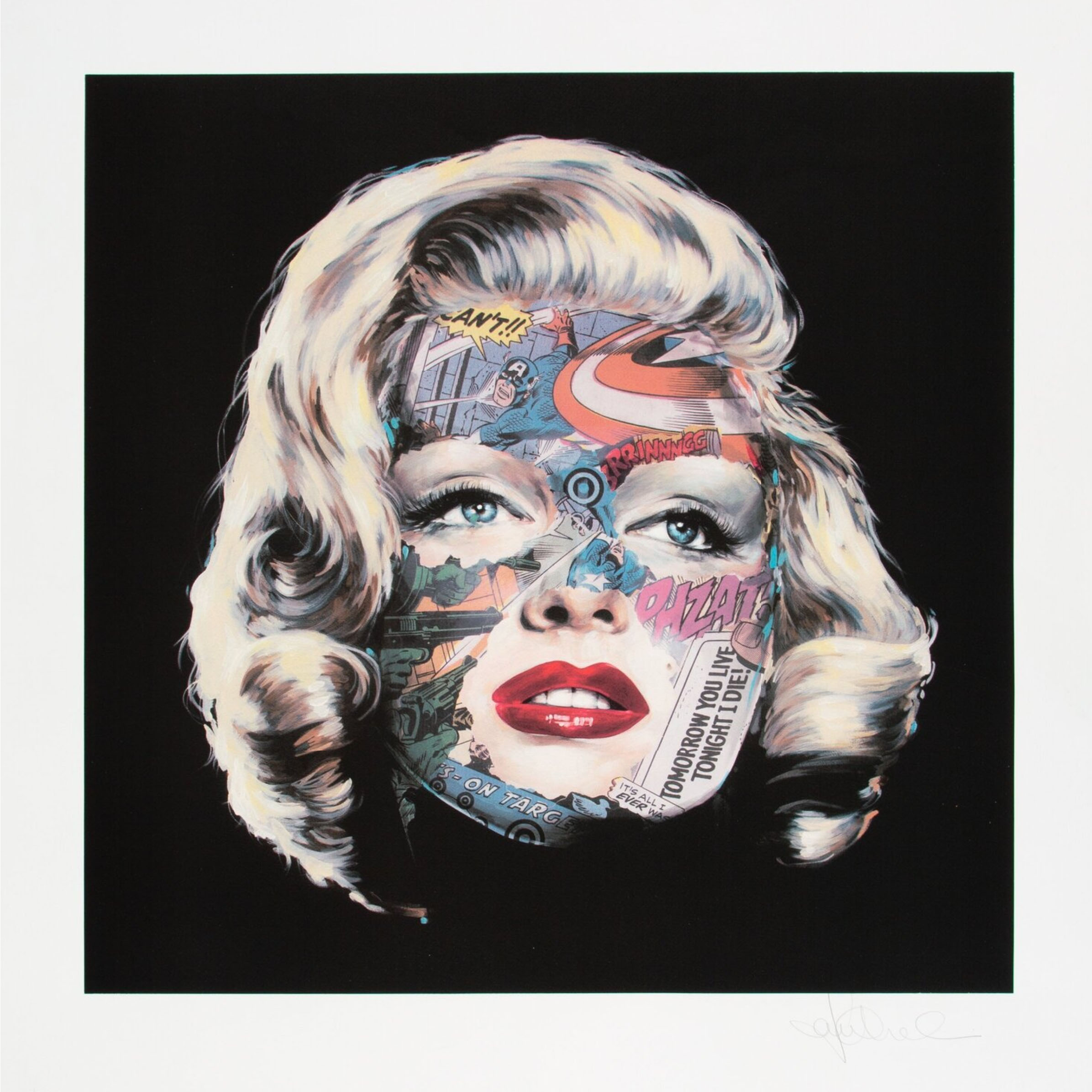
Sandra Chevrier’s “La Cage Et Tout Ce Que Je Suis / The Cage and All That I Am”
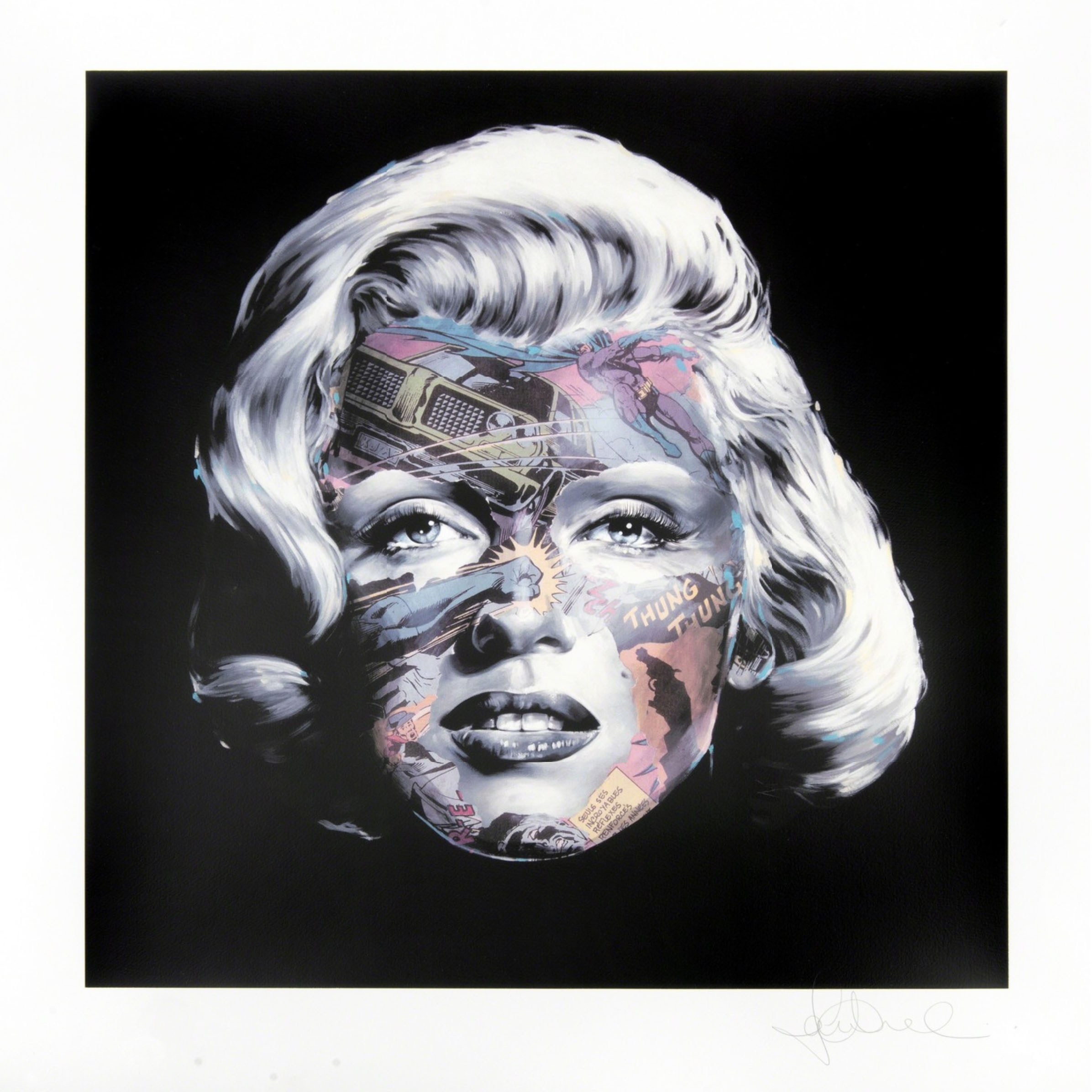
Sandra Chevrier – “La Cage A La Toute Derniere Seconde / The Cage At The Very Last Second”
How Does Pure Evil Interpret Marilyn Monroe’s Legacy?
London artist Pure Evil offers one of the most emotionally direct interpretations of Marilyn Monroe.
His celebrated Nightmare Series portrays cultural icons with a single tear running down their face. Monroe appears glamorous and instantly recognisable, yet also fragile and deeply human. The simplicity of the image has become one of Pure Evil’s most recognisable visual signatures.
According to the artist, the tears represent heartbreak, loss, and emotional pain experienced throughout life and relationships. In Monroe’s case, the gesture feels particularly poignant, reflecting the contrast between her dazzling public image and the personal struggles that have become part of her story.
Through this simple yet powerful visual device, Pure Evil transforms Monroe from an untouchable celebrity into a relatable figure whose vulnerabilities remain familiar decades after her death. The work reminds viewers that behind every icon exists a human story, and that fame often conceals as much as it reveals.
“It's an illustration of the heartbreak and sadness we have all experienced in relationships in the past.” - Pure Evil
“It’s an illustration of the heartbreak and sadness we have all experienced in relationships in the past.” – Pure Evil
Like Warhol, Invader, and Sandra Chevrier before him, Pure Evil demonstrates that Marilyn Monroe continues to serve as a powerful lens through which artists explore identity, emotion, and the complexities of modern celebrity.
.
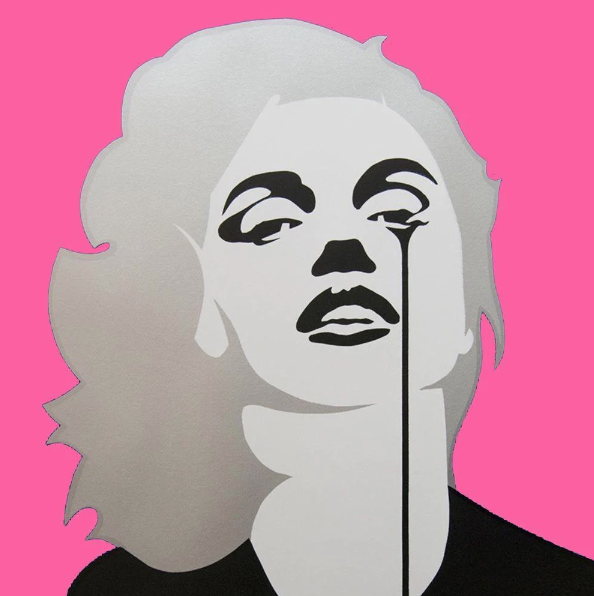
Pure Evil- Mini Marilyn Munroe (From Boxset 2017)
Marilyn Monroe’s Lasting Legacy in Contemporary Art
From Andy Warhol’s Pop Art masterpieces to Invader’s Rubikcubist experiments, Sandra Chevrier’s emotionally charged portraits, and Pure Evil’s poignant interpretations, Marilyn Monroe continues to inspire artists across generations and disciplines.
Her image remains one of the most recognisable in art history, yet the most compelling artworks reveal something beyond the icon itself. They explore the complexities of fame, identity, resilience, ambition, and the relationship between public image and personal truth. Increasingly, artists recognise Monroe not simply as a Hollywood star, but as a woman who challenged expectations, pursued creative independence, and forged her own path within a demanding industry.
As her centenary is celebrated around the world, Marilyn Monroe remains not only a Hollywood legend but also one of the most enduring muses in contemporary art. More than six decades after her death, artists continue to find new ways to reinterpret her story, ensuring that her influence extends far beyond cinema and popular culture into the wider history of art.
Her legacy endures because she was far more than a screen icon. She was intelligent, ambitious, fearless in her pursuit of creative control, and determined to be recognised on her own terms. One hundred years after her birth, Marilyn Monroe continues to inspire artists and audiences alike, standing as a symbol of confidence, individuality, and enduring cultural influence.
“Fear is stupid. So are regrets.” — Marilyn Monroe
Check out our online store for artworks of Marilyn Monroe artworks and other icons.