How Did Banksy Do It? The Mystery Behind the Royal Courts of Justice Mural
When a new Banksy piece appears, one of the biggest questions is always: how did he pull it off? The mural at the Royal Courts of Justice in London, a towering judge with gavel raised over a fallen protester was no small feat. It appeared overnight on one of the most heavily surveilled buildings in the capital, leaving the public stunned and the authorities scrambling.
The Element of Surprise
Banksy’s hallmark is secrecy. His works often appear under the cover of darkness, executed with astonishing speed and precision. The Royal Courts of Justice, located on the Strand and bustling with security, would seem like an impossible canvas. Yet the mural arrived without warning, suggesting careful planning and flawless timing.
Planning the Impossible
Banksy’s team is believed to scout locations, mapping CCTV coverage, police patrols, and public traffic flow. Accessing the wall of the Royal Courts would have required detailed knowledge of blind spots and low traffic. Large stencils, pre-prepared and rolled out on-site, allow him to work in minutes rather than hours. The blood-spattered placard and the looming figure of the judge were sprayed using multiple layers of intricate stencil work, which takes minutes rather than hours to spray.

Among the morning rush… a barrister in wig and gown, phone pressed to his ear, striding past the mural, blurring the line between Banksy’s art and real life. Image Copyright Banksy
Working Under Watchful Eyes
Central London is filled with cameras, yet Banksy thrives in precisely these hostile environments. Disguises, maybe construction worker overalls, high-vis jackets, even props like traffic cones are common tricks by Banksy to blend in. To passersby, the act of installing the mural may have looked like routine maintenance work. By the time anyone noticed, the piece was already complete. In this case, witnesses suggest the CCTV cameras mounted on the Royal Courts building were physically shifted to create a blind spot, giving Banksy and his team the cover they needed to work without being recorded.
The Logistics of Scale
This mural isn’t a small stencil; it is large, detailed, and positioned prominently. It’s likely that a small team helped secure stencils, keeping watch while the work was carried out. Banksy’s works often balance guerrilla tactics with professional execution every spray, every detail, is deliberate and fast.


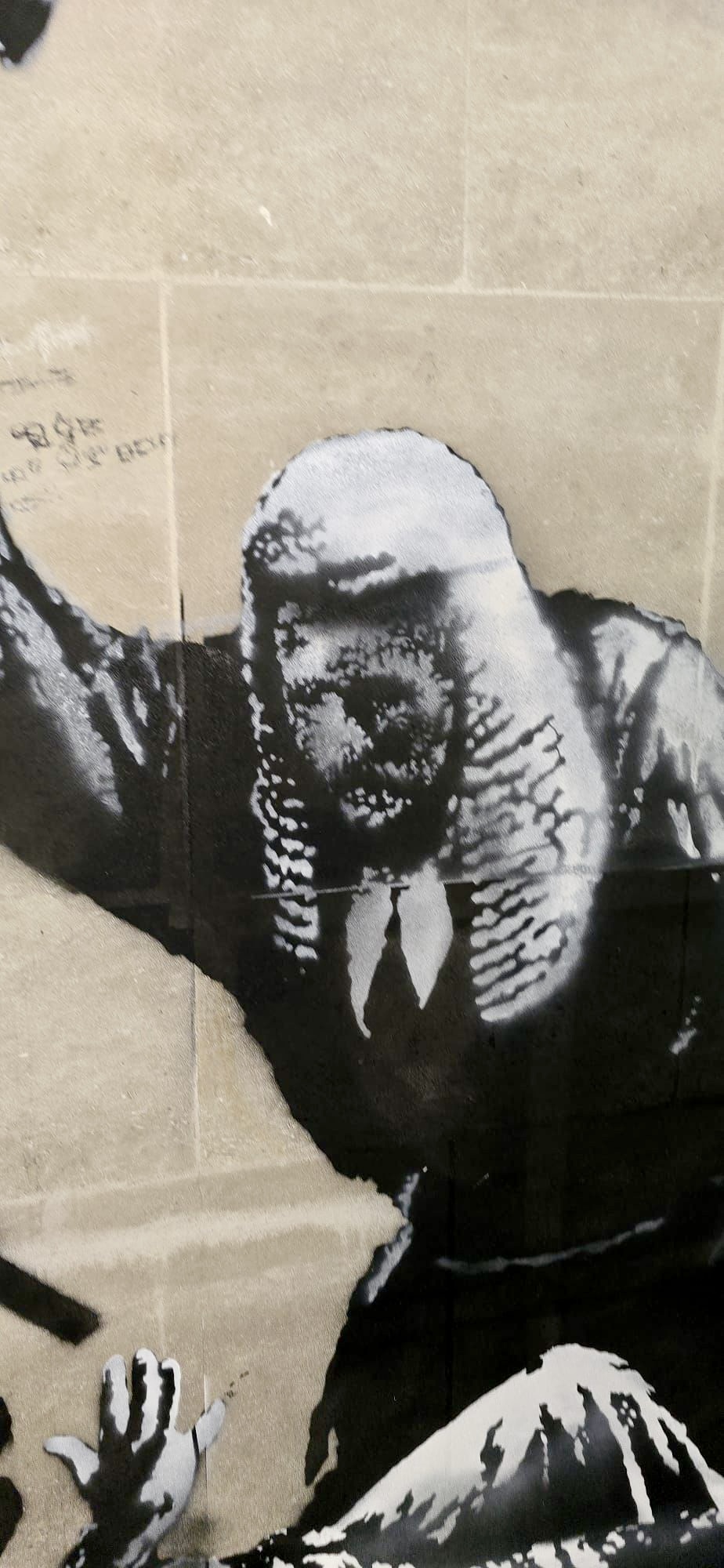
Detail of Banksy’s new mural, where iron-bar shadows fall across the violent scene. Image © Marrosi
The Final Reveal
By the morning, photos of the mural had already gone viral. Banksy confirmed authorship with an image on his official instagram channel, as he often does. The mystery of the “how” only adds to the aura of his work. Was it done in plain sight, cleverly disguised? Or did the team exploit a rare gap in the security of the Royal Courts? We may never know… however I’m sure all cctv footage from around the scene is being analysed!

Among the morning rush… a barrister in wig and gown, phone pressed to his ear, striding past the mural, blurring the line between Banksy’s art and real life. Image Copyright Banksy
Part of Banksy’s genius lies not only in the message but in the method. The audacity of painting a mural on the nation’s high court is as much the artwork as the image itself. The act of doing it, and getting away with it, becomes a performance of resistance, a reminder that even under the heaviest surveillance, dissent can find a way to leave its mark.
Meaning of the Mural
Banksy’s mural can be read as a fierce critique of how the legal system is being weaponised. By showing a judge using his gavel as a weapon against a protester, the work suggests that justice is no longer about fairness but about silencing dissent. The blood-stained placard symbolises the criminalisation of peaceful protest, while the scale and placement at the Royal Courts of Justice amplify the irony of a system meant to protect rights instead being used to erode them. The piece gains added weight in the wake of a weekend in London when nearly 900 Palestine Action protesters, including professionals and pensioners, were arrested under terror laws.
Palestine Action
Palestine is. UK action group founded in 2020 that targets arms companies over their links to violence in Palestine. With the UK government now formally banning the Palestine Action group under terror laws in July 2025, the mural reflects the lived reality of activists who face arrest, intimidation, and imprisonment for nonviolent resistance.
Since the proscription, over 1,600 people have been arrested for supporting the group, many were detained simply for peaceful protest such as carrying signs or holding banners. Among those arrested have been professionals, pensioners, healthcare workers, priests, and veterans. Banksy’s image of justice turned violent resonates as a warning of how far the government is willing to go to shield power and silence dissent.
The proscription decision has been widely criticised. Human rights organisations, UN experts, and civil liberties advocates argue it’s a dangerous conflation of legitimate dissent with terrorism, warning it suppresses free speech and peaceful activism.
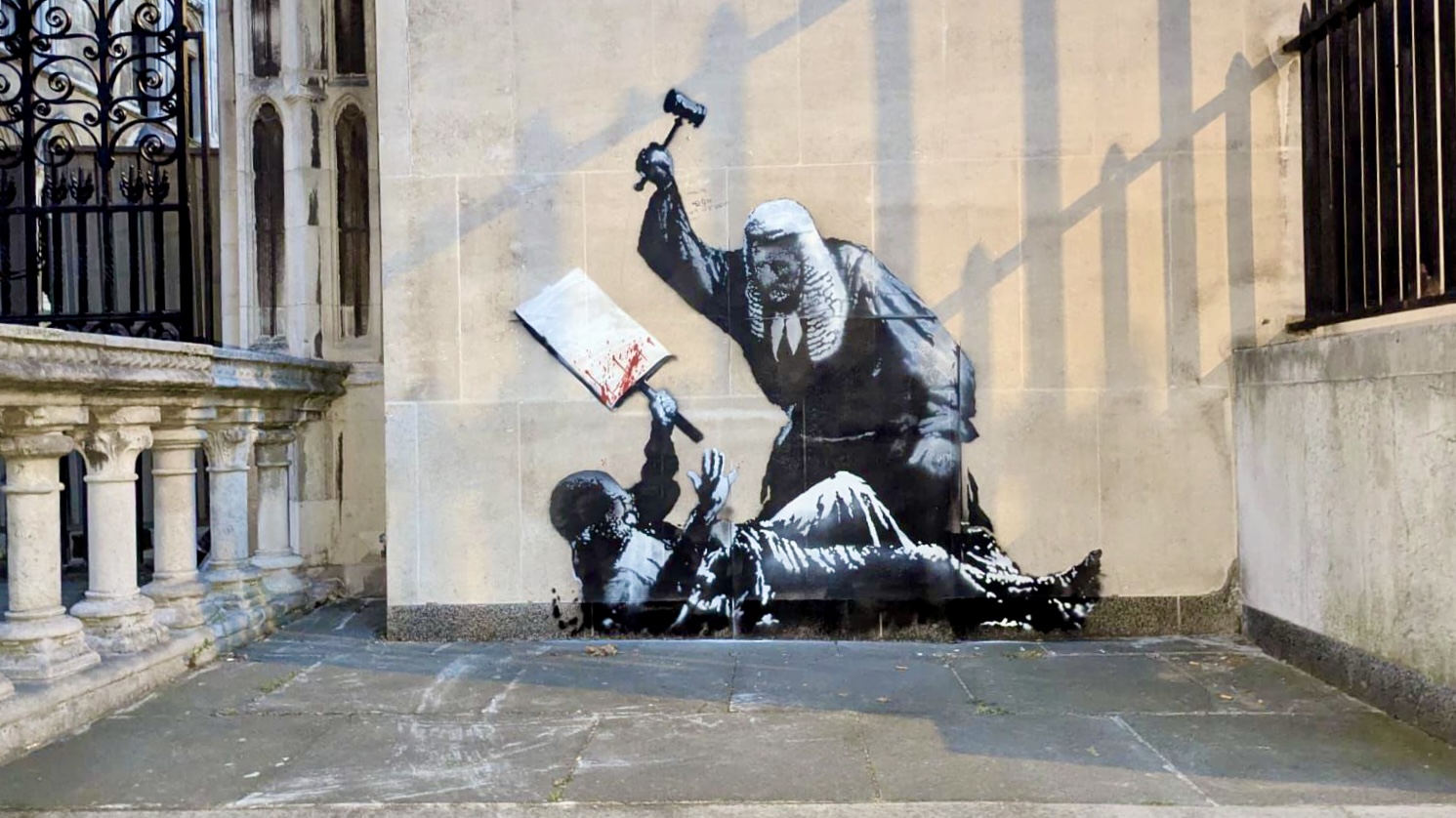
Detail of Banksy’s new mural, where iron-bar shadows fall across the violent scene. Image © Marrosi
Covered and Contested
Soon after the viral photos began flooding social media, two security guards were stationed directly in front of the mural. It was quickly covered in black sheeting, and then a metal wall with concrete footings was installed to remove the piece from public view. What will happen to this Banksy mural next remains uncertain… only time will tell.
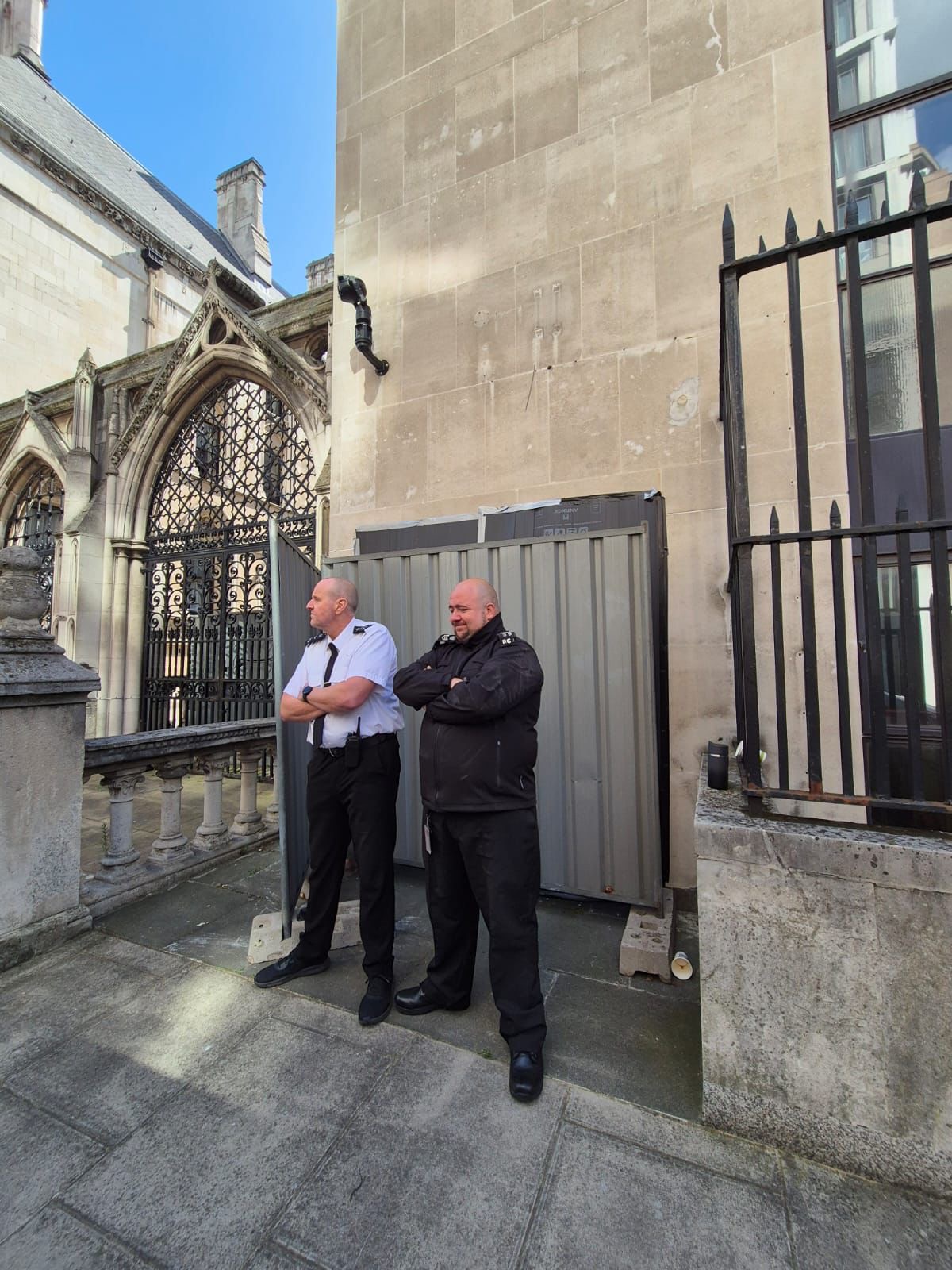
It’s a cover up. Two guards stand in front of the covered up mural. Image copyright Marrosi
Read more about the meaning behind the mural in our coverage here
Banksy’s work continues to challenge power, provoke debate, and leave lasting marks — even when erased. For those who want to explore more of his practice, you can discover Banksy artworks in our online store here.