Why Street Art Is the Antidote to Overproduced Home Décor
Street art offers something mass-produced home décor cannot: authorship, cultural context and individuality. In an era of algorithm-approved interiors and endlessly reproduced prints, original and limited-edition urban art gives a room a genuine point of view.
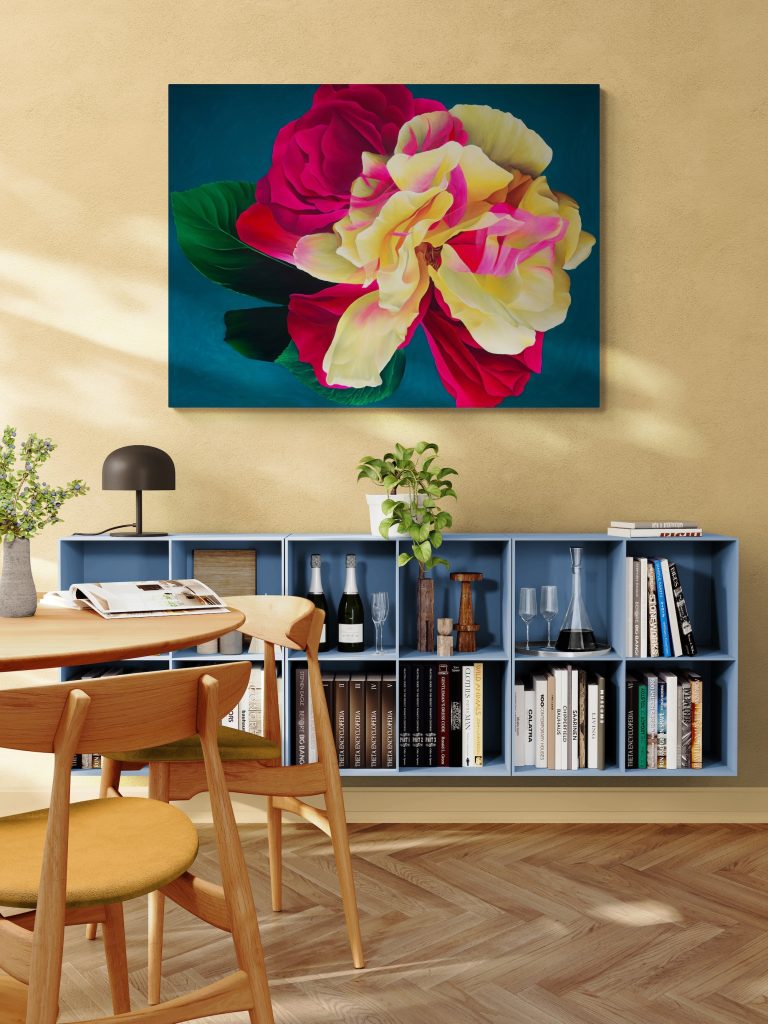
Born in public space and shaped by the energy of the city, street art brings colour, tension, history and artistic intent into the home. Rather than simply filling a wall, works by artists such as Banksy, STIK, Sophie Mess and PichiAvo can influence the palette, atmosphere and identity of an entire interior.
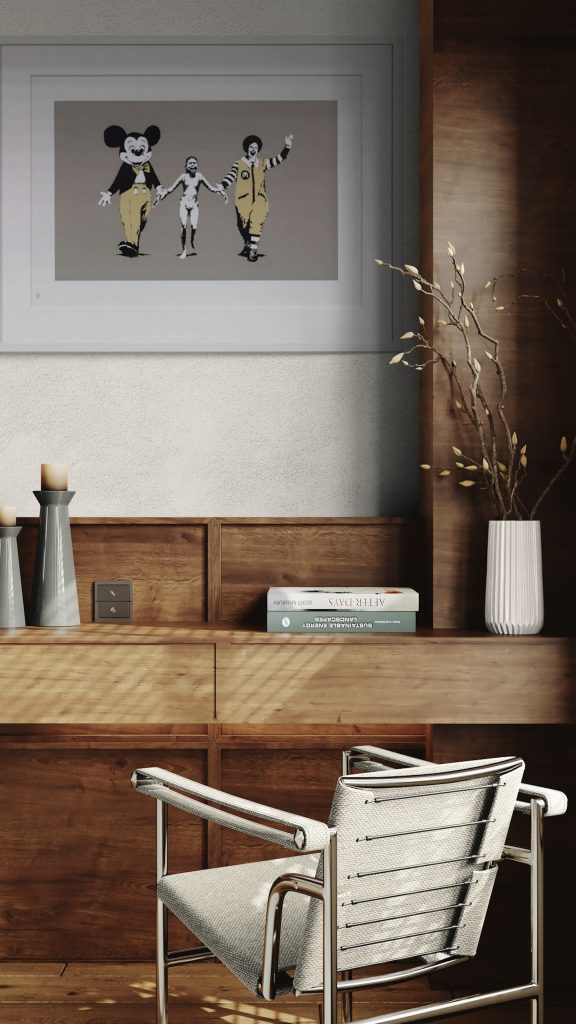
Banksy – Napalm unsigned print
From Decoration to Identity
Mass-produced wall art is designed to work almost anywhere. Significant art does the opposite: it makes a space more particular.
When street and urban art moves indoors, it carries the visual language of the artist with it. A Banksy print introduces political and cultural tension. Sophie Mess brings botanical movement and saturated colour. PichiAvo combines classical imagery with the language of graffiti. These works do not simply finish a room. They give it character.
This distinction is important for interior designers. Rather than selecting an artwork because it matches an existing scheme, a strong piece can become the starting point: establishing colour, scale, mood and even the way furniture is positioned around it. The interior begins to feel collected rather than assembled.
Let the Artwork Lead the Room
Some of the most successful interiors give art enough space to hold its own. A large-scale work can command an entire wall, establishing the mood of the room before furniture or accessories enter the conversation. Banksy x Blur’s Think Tank XL Bus Stop poster demonstrates this particularly well. Originally produced as a large-format advertising poster for Blur’s 2003 album Think Tank, Banksy’s embracing figures create an immediate focal point, while the scale gives the work an almost architectural presence.
Placed within an interior, a work of this size does not need a crowded wall around it. The artwork provides the visual impact; the furniture, lighting and surrounding space can simply respond to the piece.
It is a useful reminder that collecting art for an interior is not about filling every available surface. Sometimes one strong work is enough.
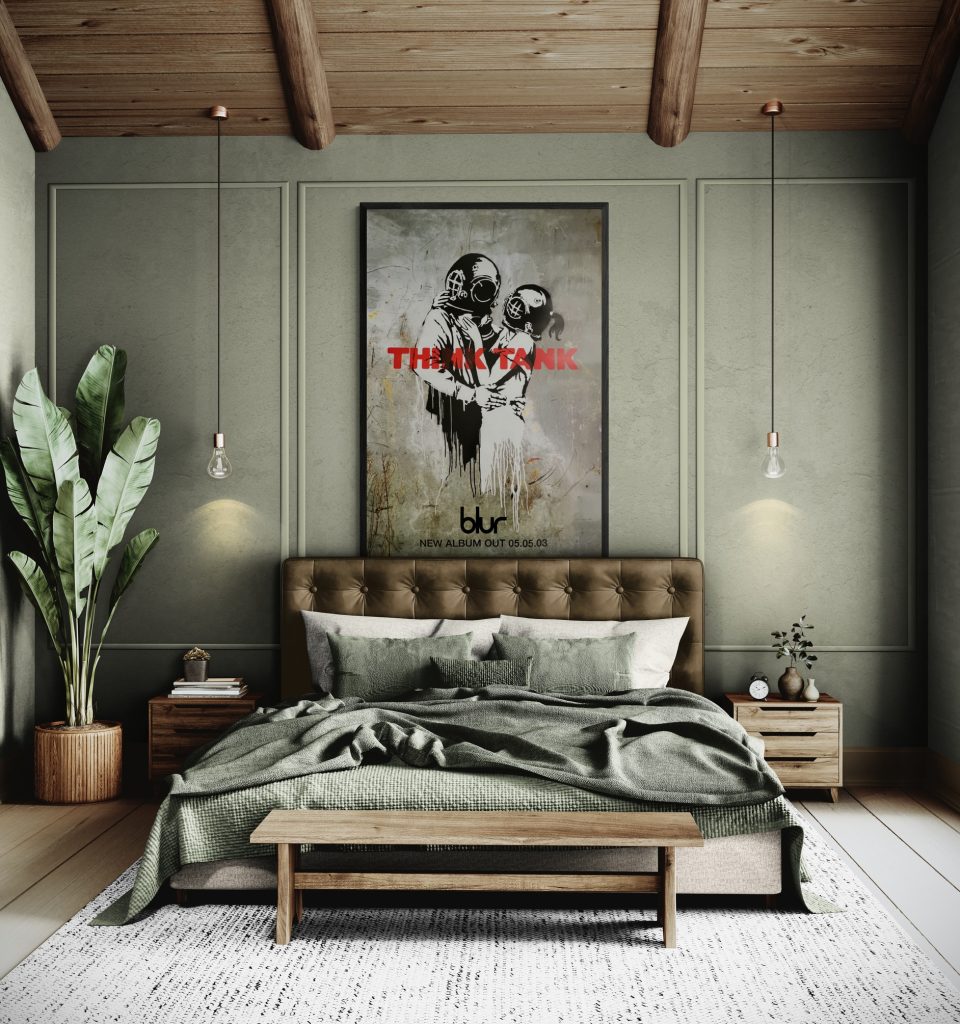
Banksy x Blur – Think Tank XL Bus stop poster
Original Art and Limited Editions
Original paintings and sculptures naturally carry the physical presence of the artist’s hand, but carefully produced limited editions can be equally compelling within an interior.
STIK’s Hip Artist Proof is a good example. Reduced to the artist’s familiar six-line figure, the image appears deceptively simple, yet its scale and strong block colour give it considerable presence when framed and placed alongside modern furniture, such as the Verner Panton iconic Chair.
The Hip Artist Proofs were produced as giclée prints on heavy wove paper in an edition of just 20, signed and numbered by STIK. Their restricted edition, provenance and direct relationship to the artist’s wider practice distinguish them fundamentally from mass-produced decorative prints.
The strength of a limited edition lies not simply in rarity, but in its connection to the artist. Production method, edition size, publishing history and provenance all contribute to what the collector is actually bringing into the room.
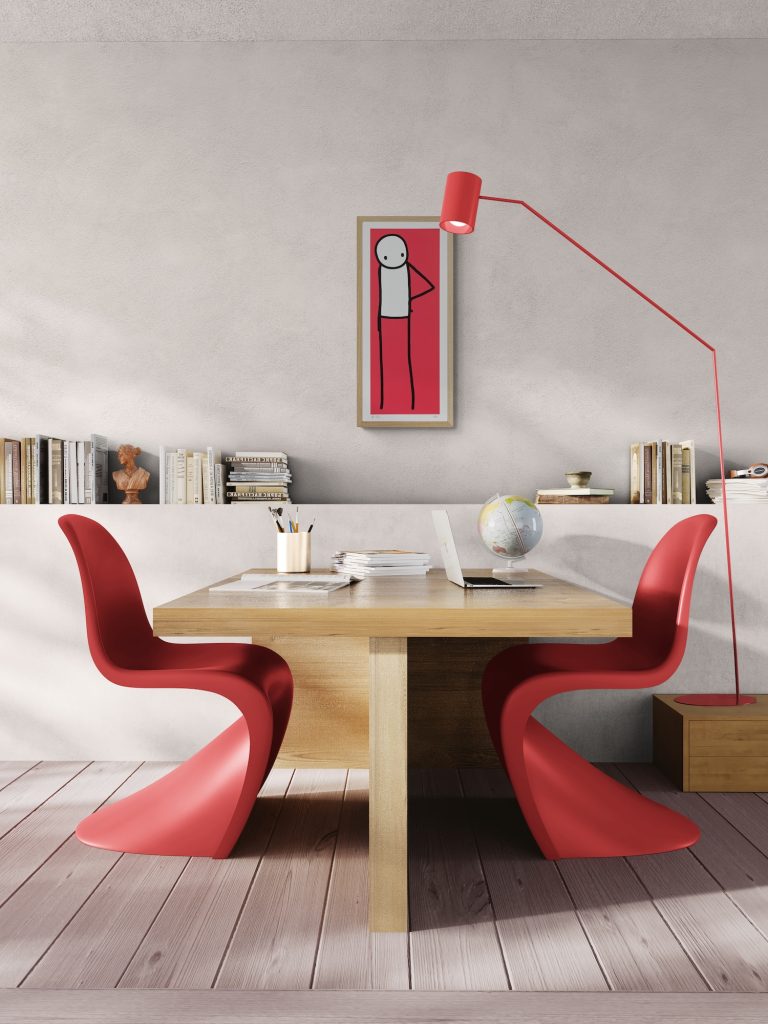
Read more about STIK’s Hip print and its history.
Similarly, the classical-meets-contemporary language of PichiAvo’s Orphic Hymn to the Three Graces VIII works particularly well where an interior already contains strong architecture or design.
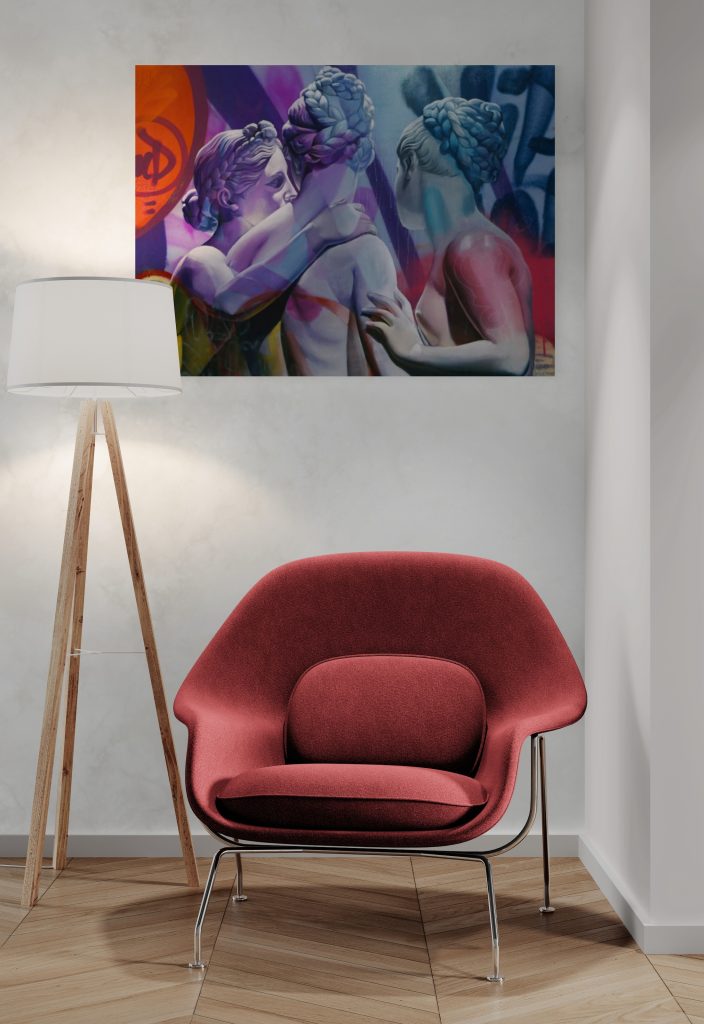
PichiAvo – -Orphic-hymn to the three graces
Art With a Life Beyond the Interior
Furniture changes, rooms are repainted and interior trends move on, but a significant artwork will continue to hold its own. That is one of the strengths of collecting established street and urban artists: the work belongs to a wider cultural and artistic history that exists independently of the space around it.
A Banksy NOLA signed print is a perfect example. Its rarity, edition history and place within Banksy’s wider practice give it a significance that goes far beyond interior styling. Whether hung in a restrained contemporary room, a period property or a more eclectic space, the work retains its identity while complementing its surroundings. The room may change around it, but the artwork remains.
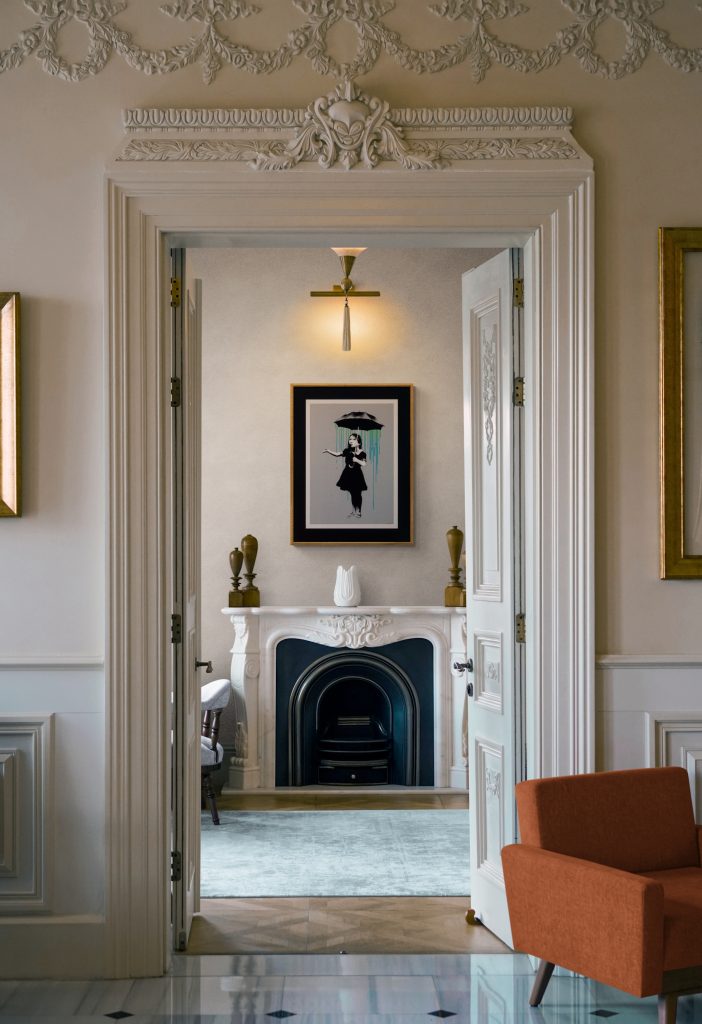
Banksy. – Nola signed (Green / Blue)
Related Reading
For a broader look at the relationship between contemporary urban art and architecture, read When the Streets Move In: How Urban Masters Are Redefining Interior Design.
Interior designers, architects and hospitality clients can explore Urban Art for Hotels, Offices & Interior Design Projects for sourcing, commissioning and installation across commercial spaces.
For businesses and developers considering a tailored project, Urban Art Consultancy: Connecting Artists with Businesses and Visionary Spaces explains how GraffitiStreet works with artists and clients to create art-led environments.
Discover Urban Art for Your Interior
GraffitiStreet works with private collectors, interior designers and architects to source original paintings, sculpture and limited editions for distinctive residential and commercial spaces. From selecting the right artist and scale to considering placement, framing and the wider character of the room, we help build interiors around artworks with real presence and lasting significance.
Explore available works in our online store, or contact GraffitiStreet to discuss an artwork, interior project or private viewing.
GraffitiStreet Gallery
25A West Street
Chichester, PO19 1QW
England